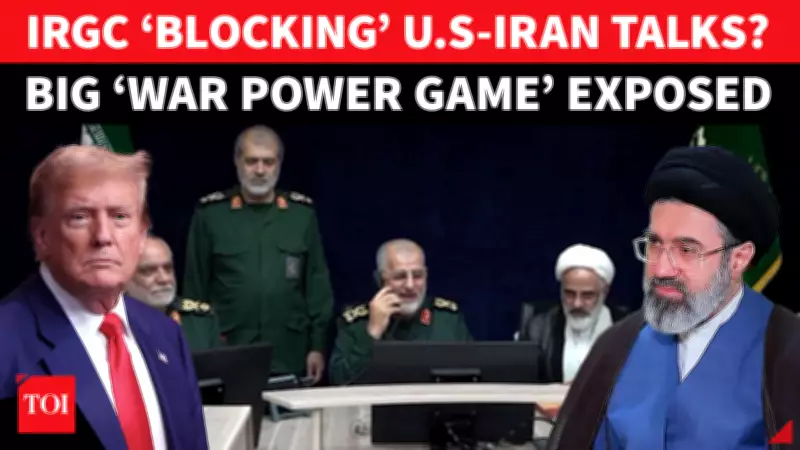
Is the path to peace blocked from the inside? While the world watches Washington and Tehran’s diplomats, reports suggest the real decision-makers are in the Islamic Revolutionary Guard Corps (IRGC). For the Guards, the current war isn't just a military engagement—it’s a power grab. By expanding their control over the economy, national security, and internal dissent, the IRGC has become stronger than ever. The terrifying reality: they may now have more to gain from a continued war than from a final peace deal.
IRGC’s Expanding Influence
According to multiple reports, the IRGC has been systematically increasing its influence across Iran’s political and economic landscape. This includes taking over key industries, controlling border trade, and infiltrating government agencies. The ongoing conflict with the United States provides a convenient pretext for the IRGC to justify its expansive role and suppress any opposition.
Economic Control
The IRGC now controls a significant portion of Iran’s economy, including sectors like oil, gas, construction, and telecommunications. This economic power allows the Guards to fund their military operations and reward loyalists, further entrenching their position. A peace deal could threaten these interests by opening up the economy to foreign competition and reducing the need for a wartime economy.

Security and Dissent
The war has also enabled the IRGC to tighten its grip on national security. Under the guise of protecting the country, the Guards have expanded their surveillance networks, cracked down on dissent, and sidelined rival security forces. A peace agreement might lead to demands for demilitarization and human rights reforms, which the IRGC sees as a direct threat to its power.
Stalling Tactics
Reports indicate that IRGC commanders have been deliberately slowing down diplomatic negotiations. They have leaked information to hardline media, spread disinformation about US intentions, and even threatened negotiators. These tactics aim to create a stalemate that keeps the conflict alive, benefiting the IRGC’s long-term ambitions.
Internal Power Struggles
The IRGC’s stance is also driven by internal power struggles within Iran’s leadership. While President Ebrahim Raisi and the Foreign Ministry have shown willingness to negotiate, the IRGC views any compromise as a weakness. By stalling talks, the Guards hope to weaken their political rivals and emerge as the ultimate authority in Iran.
International Implications
The stalling of peace talks has serious consequences for regional stability. Continued conflict risks further escalation, including potential clashes in the Persian Gulf and increased attacks on US allies. The international community, including the UN and European powers, has expressed concern over the IRGC’s role and urged all parties to return to the negotiating table.
As the world awaits a breakthrough, the IRGC’s calculations remain a critical obstacle. Whether the US and Iranian moderates can overcome this internal blockade may determine the fate of peace in the region.