

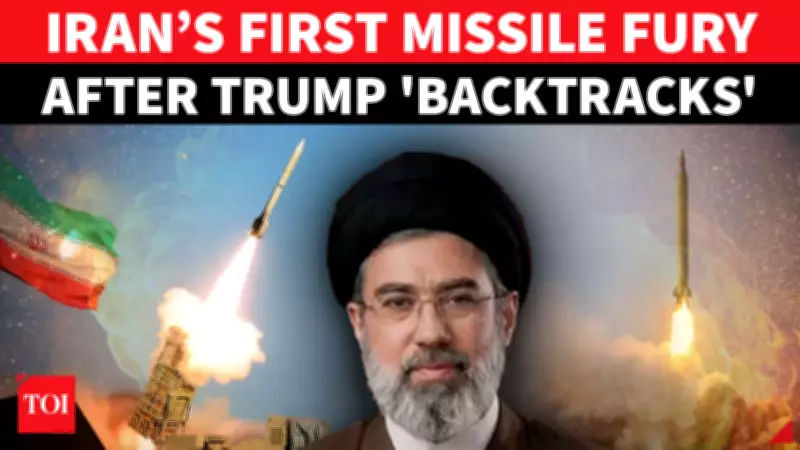
Iran's Revolutionary Guard Unleashes Retaliatory Missile Barrage Following Trump's New Ultimatum
In a dramatic escalation of Middle East tensions, Iran's Islamic Revolutionary Guard Corps has initiated a significant wave of retaliatory missile and drone strikes. This aggressive military action comes directly in response to what Tehran perceives as a backtrack by former US President Donald Trump regarding potential military intervention. The IRGC's offensive marks the 76th wave of its ongoing Operation True Promise-4, signaling a sustained and calculated campaign against perceived adversaries.
Precision Strikes Target Strategic US and Israeli Military Installations
The IRGC's coordinated assault specifically targeted critical US military assets across the region with remarkable precision. Among the primary objectives were the strategically vital Fifth Naval Fleet and key regional bases including al-Dhafra, Victoria, and Prince Sultan. Simultaneously, Iranian forces launched strikes against significant Israeli sites in Tel Aviv, Ashkelon, and Haifa, demonstrating Tehran's capability to engage multiple fronts simultaneously.
Iranian military officials have confidently asserted that their advanced missiles successfully penetrated sophisticated air defense systems deployed by both the United States and Israel. This claim directly challenges Western assessments that suggested Iran's missile arsenal had been significantly degraded through previous conflicts and sanctions. The successful penetration of these defenses represents a substantial propaganda victory for Tehran's military establishment.

Iranian Leadership Rejects Negotiation Rumors, Demands Resolution on Its Terms
In the aftermath of these strikes, Iran's political and military leadership has categorically rejected circulating reports about potential US-Iran negotiations. Senior officials have reiterated their firm position that any resolution to the ongoing crisis must be negotiated strictly on Iran's terms. This uncompromising stance reflects Tehran's determination to maintain strategic autonomy and resist external pressure regarding its regional ambitions and military capabilities.
The timing of these strikes appears deliberately calculated to coincide with heightened geopolitical tensions following Trump's renewed ultimatum. Analysts suggest this represents Iran's method of demonstrating both its military readiness and political resolve in the face of perceived American aggression. The scale and coordination of these attacks indicate extensive planning and intelligence gathering by Iranian forces.
Escalating Regional Conflict and Global Security Implications
This latest escalation significantly heightens the risk of broader regional conflict, with potential implications for global energy markets and international security. The targeting of both US and Israeli installations simultaneously represents a bold strategic move that could provoke substantial retaliation from multiple quarters. Military experts are closely monitoring how both the United States and Israel will respond to these direct attacks on their sovereign territories and military assets.
The ongoing Operation True Promise-4, now in its 76th wave, demonstrates Iran's commitment to sustained military pressure against what it views as hostile foreign presence in the Middle East. This persistent campaign suggests Tehran is prepared for prolonged conflict rather than seeking quick diplomatic resolution. The situation remains fluid and dangerously volatile, with the potential for rapid escalation depending on subsequent actions by all involved parties.






