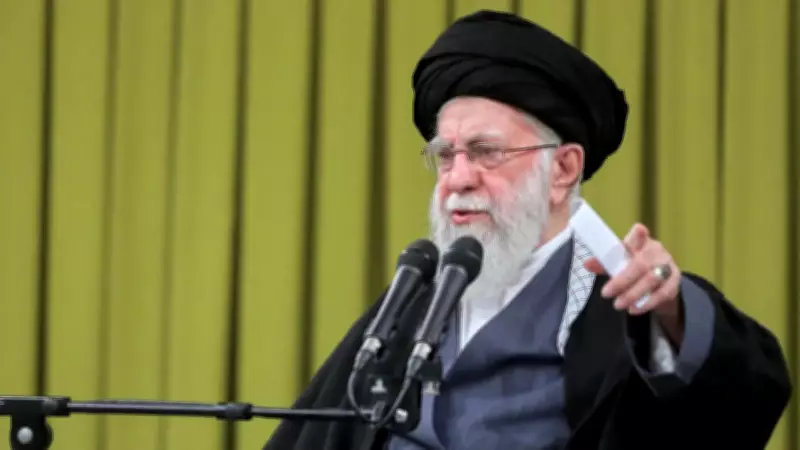
Years of Covert Surveillance Preceded Khamenei's Death in Coordinated Strike
For an extended period, Israeli intelligence operatives meticulously monitored the activities of Iran's most influential figure, Ayatollah Ali Khamenei. In a dramatic turn of events that marks one of the most significant military operations in recent history, the Supreme Leader of Iran, who held power for over three decades, has been eliminated in a coordinated assault by United States and Israeli forces.
Comprehensive Intelligence Gathering Through Hacked Systems
According to detailed reports from the Financial Times, this ambitious mission was the result of prolonged planning, relying on years of patient surveillance, extensive data collection, and careful political assessment. When security personnel and drivers for high-ranking Iranian officials arrived for duty near Pasteur Street in Tehran, the location where Khamenei was fatally targeted in an Israeli air raid on Saturday, they were likely completely unaware of being under observation.
The Financial Times reveals that nearly all traffic surveillance cameras in Tehran had been compromised years earlier. The video feeds from these devices were allegedly encrypted and transmitted to servers located in Tel Aviv and southern Israel, as confirmed by individuals with knowledge of the operation. One particular camera angle proved exceptionally valuable, capturing where protection teams parked their personal vehicles and offering insights into daily routines within the heavily fortified compound.

Over time, sophisticated algorithms developed detailed profiles, known in intelligence circles as a "pattern of life." These comprehensive dossiers included residential addresses, work schedules, commuting paths, and critically, which specific officials each guard was assigned to protect. This represented just one stream of intelligence among hundreds utilized in the operation.
Disruption of Communications and Intelligence Dominance
Israeli and American intelligence agencies reportedly infiltrated mobile phone networks in the vicinity of Pasteur Street. At crucial moments, certain cellular towers were deliberately disrupted, causing devices to appear busy and preventing protection teams from receiving potential warnings. Long before any explosives were deployed, Israeli intelligence had established what one official described as near-complete familiarity with Tehran's landscape.
An Israeli intelligence official stated, "We knew Tehran like we know Jerusalem." The official added, "And when you know a place as intimately as the street where you grew up, you immediately notice anything that appears out of place." This intelligence supremacy resulted from years of effort by Israel's signals intelligence Unit 8200, human sources recruited by Mossad, and extensive data analysis conducted by military intelligence teams.
Israel also employed social network analysis, a mathematical approach that examines relationships and influence patterns, to process billions of data points and identify new potential targets. Itai Shapira, a brigadier general in the Israeli military reserves with twenty-five years of experience in intelligence, explained, "In Israeli intelligence culture, targeting intelligence represents the most essential tactical element—it is designed to enable strategic execution. If decision-makers determine that an individual must be eliminated, the prevailing culture in Israel is: 'We will deliver the targeting intelligence.'"
Political Decision-Making and Strategic Timing
Despite such advanced technological capabilities, officials emphasize that eliminating Khamenei ultimately constituted a political choice. For years, Israel refrained from directly targeting him. During the twelve-day conflict in June of the previous year, Israeli strikes eliminated more than a dozen Iranian nuclear scientists and senior military officials while disabling air defense systems, yet Khamenei remained untouched.
This instance proved different. When US and Israeli intelligence ascertained that Khamenei would conduct a Saturday morning meeting at his compound, they recognized a rare opportunity. Senior Iranian officials would be assembled in a single location. If formal warfare commenced, these individuals would likely relocate to underground bunkers beyond Israel's operational reach.

One individual familiar with the situation informed the Financial Times, "It was unusual for him not to be in his bunker—he maintained two bunkers—and if he had been present there, Israel would have been unable to reach him with the munitions at their disposal." Unlike his ally Hassan Nasrallah, who spent years concealed underground before being killed in Beirut in 2024, Khamenei did not live in constant hiding. He had publicly addressed the possibility of being killed and reportedly believed martyrdom was a potential outcome.
Nevertheless, striking during daylight hours represented a calculated maneuver. The Israeli military later indicated that attacking in the morning allowed for tactical surprise, despite Iran's state of preparedness.
American Involvement and Confirmation Protocols
Behind the scenes, Washington played a pivotal role. While Israel possessed signals intelligence from compromised cameras and mobile networks, American agencies reportedly had a human source who verified that the meeting was proceeding as scheduled. The Central Intelligence Agency declined to comment on these allegations.
Israeli doctrine mandates that two senior officers working independently confirm a target's presence before authorizing a strike. For a figure as prominent as Khamenei, failure was not considered an acceptable option. Israeli fighter jets reportedly flew for several hours before discharging as many as thirty precision-guided munitions. Some of the missiles employed were variants of the Sparrow system, capable of striking a target as compact as a dining table from distances exceeding one thousand kilometers.
Political Shift Toward Military Escalation
The decision to escalate hostilities did not occur abruptly. In early February, Israeli Prime Minister Benjamin Netanyahu convened with US President Donald Trump in the Oval Office. For weeks, both sides had deliberated potential military action against Iran, even as American officials were publicly engaged in nuclear negotiations with Tehran.
Trump expressed clear frustration with diplomatic efforts, dismissing the history of discussions with Iran as years of "talking and talking and talking." When questioned about supporting regime change, Trump responded that it "seems like that would be the best thing that could happen." Two weeks later, he authorized a large-scale bombardment in coordination with Israel. These strikes resulted in the death of Iran's supreme leader, impacted nuclear and military facilities, and ignited violence across the region.
Publicly, Trump appeared to oscillate between negotiation and confrontation. However, according to individuals familiar with the discussions, his shift toward military action gained momentum behind closed doors, encouraged by Netanyahu and reinforced by Trump's confidence following previous overseas operations. The New York Times reported that this decision was based on accounts from officials with direct knowledge of the deliberations, many of whom spoke anonymously due to the sensitive nature of the discussions.
For Netanyahu, American entry into the conflict represented a strategic triumph. Months earlier, during a meeting in Florida, he had sought approval to strike Iranian missile sites. Instead, he secured a more substantial outcome—a full American partnership in a campaign that rapidly reshaped the Middle Eastern landscape.
Not all operational details may ever become public, as intelligence methodologies remain closely guarded secrets. What remains evident is that the strike against Khamenei represented the culmination of years of surveillance, technological precision, and political determination—a moment where intelligence, timing, and military power converged with historic consequences.