

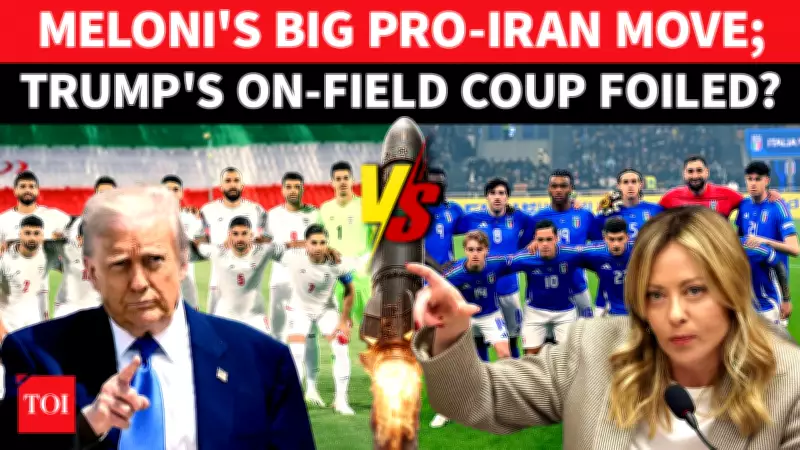
A storm has erupted around the 2026 FIFA World Cup, with geopolitical tensions spilling onto the football pitch. Paolo Zampolli, a special envoy of former U.S. President Donald Trump, confirmed that he had requested FIFA to exclude Iran from the tournament and award its spot to Italy, which failed to qualify. The proposal was swiftly rejected by Italian officials.
Italy's Strong Rejection
Italy's Sports Minister, Andrea Abodi, described the plan as both impossible and inappropriate. He emphasized that Italy does not seek to enter the World Cup through the back door. The President of the Italian Olympic Committee, Giovanni Malagò, also condemned the proposal, calling it offensive to the nation's footballing integrity.
U.S. Position on Iranian Participation
The United States, which is co-hosting the tournament alongside Mexico and Canada, has drawn a clear line regarding Iranian involvement. While Iranian footballers will be permitted to enter the U.S., any personnel linked to the Islamic Revolutionary Guard Corps (IRGC) traveling with the team will be barred. U.S. Secretary of State Marco Rubio stated the position bluntly, reflecting ongoing tensions between Washington and Tehran.

Meanwhile, FIFA President Gianni Infantino has insisted that Iran will participate in the tournament, rejecting any calls for their exclusion. The decision underscores FIFA's stance of keeping politics separate from sport, despite the escalating conflict between the U.S. and Israel against Iran.
Geopolitical Backdrop
The controversy unfolds against the backdrop of a prolonged U.S.-Israel conflict with Iran, raising the stakes for the World Cup opener scheduled for June 11. The tournament has become an unexpected battleground for geopolitical maneuvering, with various actors attempting to leverage football for political aims.
Italy's firm rejection of the proposal highlights its commitment to fair play and sporting merit. The nation has made it clear that it will not accept a place in the World Cup through political intervention. FIFA, for its part, has not opened a back door for any team, maintaining that qualification is based on performance on the field.
As the world's biggest sporting event approaches, the intersection of football and politics continues to generate headlines. The situation remains fluid, with all eyes on how FIFA will navigate the competing pressures from world powers while preserving the integrity of the game.






