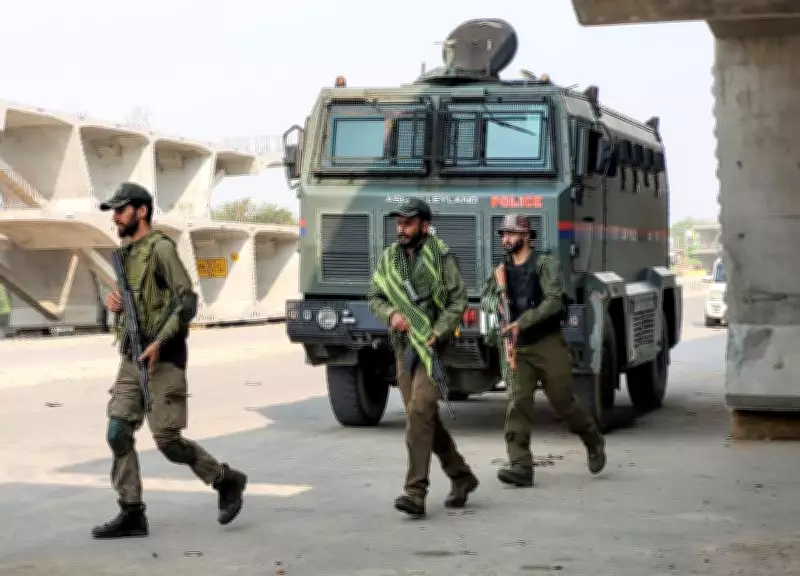
A recent incident in Kishtwar, Jammu and Kashmir, where Army personnel allegedly entered a police station and assaulted officials, has sparked concerns over coordination between the two forces in counter-terror operations. The Jammu and Kashmir Police have registered a First Information Report (FIR) against nearly 40 Army personnel, including Major Vikas Sharma and Naib Subedar Shanker Gurkhe of the 17 Rashtriya Rifles (RR), for allegedly assaulting police personnel at the Atholi police station.
Background of the Incident
The altercation reportedly began when the driver of a private vehicle associated with the Army got into a dispute with the driver of the convoy of Kishtwar Deputy Commissioner Pankaj Sharma, who was en route to an official function. The private vehicle was subsequently impounded and taken to the Atholi police station. In response, the Army personnel entered the station and allegedly assaulted police officials.
Impact on Anti-Terror Operations
The incident has raised alarms about the potential impact on joint anti-terror operations in the region. The J&K Police, Army, and CRPF routinely conduct coordinated operations against terrorists hiding in the dense forests of Kishtwar. Earlier this year, four terrorists who had infiltrated the Chhatru forest area were eliminated in such joint operations.

Former Director General of Police (DGP) Shesh Paul Vaid termed the incident unfortunate and emphasized the need for dialogue. Speaking to The Tribune, Vaid said, "When I was serving in the J&K Police, such incidents did occur, but we resolved them through discussions. Such episodes are undesirable as they can damage the coordination between the police and the Army, which are working together against terrorism in J&K."
Joint Inquiry Initiated
Officials have confirmed that a joint inquiry has been launched into the incident, and action will be taken based on its findings. A senior Army officer, speaking on condition of anonymity, highlighted the crucial role of the J&K Police in anti-terror operations, stating, "The intelligence network of local police personnel has generated several leads on terrorists hiding in forest areas in recent years. These inputs are vital for launching operations against heavily armed ultras."
Coordination Mechanisms
Senior Army and police officials regularly hold joint coordination meetings to assess operational preparedness. Intelligence sharing between the police and the Army is a standard feature of counter-terror operations. The incident, however, underscores the need for improved communication and conflict resolution mechanisms to prevent such occurrences from undermining the collaborative effort against terrorism.