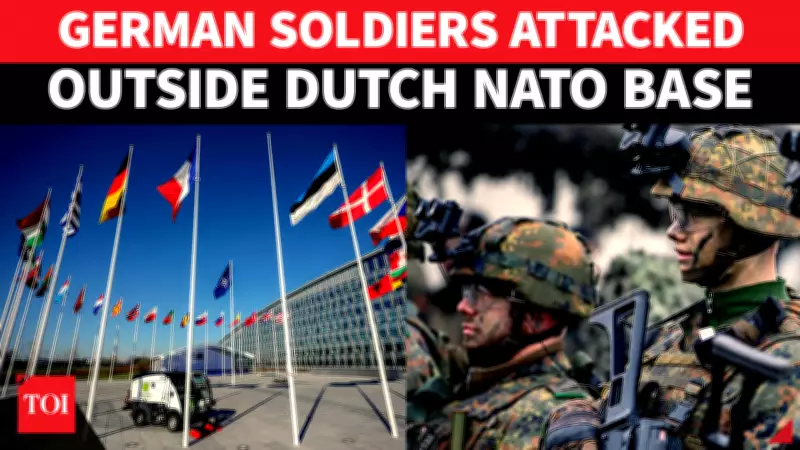
Two German officers were reportedly attacked outside NATO’s operational headquarters in the Netherlands by masked men shouting anti-NATO slogans. The incident occurred near Brunssum during a period of heightened security fears linked to the ongoing US-Israeli war against Iran. NATO had already raised its alert level to “Bravo” over concerns about terrorism and sabotage targeting alliance personnel. Dutch military police are currently investigating the assault, and no arrests have been made so far. The attack has intensified concerns over growing anti-NATO sentiment and the rising threats facing military personnel across Europe.
Details of the Attack
The assault took place in the vicinity of the Allied Joint Force Command Brunssum, a key NATO operational hub. Witnesses reported that a group of masked individuals approached the German soldiers and began shouting anti-NATO slogans before physically attacking them. The motive appears to be linked to the broader geopolitical tensions stemming from the US-Israeli military actions against Iran, which have sparked protests and hostility in various parts of Europe.
NATO's Response
NATO had previously elevated its security posture to “Bravo,” the second-highest alert level, indicating a heightened risk of terrorist attacks or sabotage. This measure was taken in response to increasing threats against allied personnel and infrastructure. The attack near Brunssum underscores the challenges faced by NATO forces as they navigate a volatile security environment.

Investigation and Security Measures
Dutch military police have launched a thorough investigation into the incident. They are reviewing surveillance footage and interviewing witnesses to identify the perpetrators. Meanwhile, NATO has reinforced security around its facilities in the Netherlands and other European nations. The alliance is also coordinating with local authorities to prevent further incidents.
Growing Anti-NATO Sentiment
This attack is part of a worrying trend of rising anti-NATO sentiment across Europe. Critics of the alliance argue that its actions, particularly in the context of the Iran war, are escalating conflicts rather than promoting peace. The incident has sparked debates about the safety of military personnel and the need for enhanced protective measures.
Broader Implications
The assault highlights the precarious situation for NATO forces amid global tensions. With the war in Iran continuing to fuel instability, alliance members are on high alert. The attack near Brunssum serves as a stark reminder of the risks faced by soldiers stationed abroad and the importance of maintaining robust security protocols.