

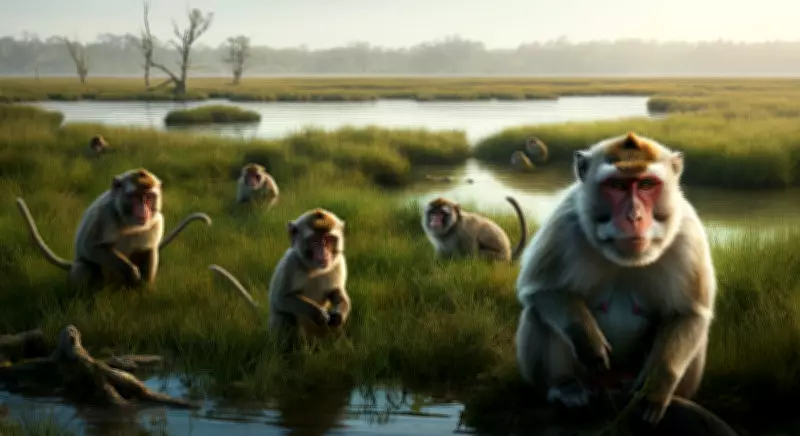
Off the coast of Beaufort, South Carolina, lies a small, marshy island that appears similar to many others scattered along the state's Lowcountry. However, Morgan Island conceals a strange secret: it is home to thousands of rhesus macaques, with no permanent human residents. Commonly referred to as "Monkey Island," this nearly 4,500-acre island has been completely off-limits to the public for decades, protected by "no trespassing" signs and federal contracts. The monkeys are not native to America; they arrived from Puerto Rico in 1979 as part of a biomedical research programme and have since multiplied into one of the largest primate colonies in the continental United States. Here is the strange story of how Morgan Island became Monkey Island.
How Morgan Island in South Carolina Became Home to Thousands of Rhesus Monkeys
Morgan Island sits within South Carolina's ACE Basin, a vast network of marshes and barrier islands managed by the South Carolina Department of Natural Resources as part of one of the largest undeveloped estuaries on the East Coast. For most of its history, the island was simply another uninhabited patch of forest and tidal marsh. That changed in 1979, when officials decided to relocate a breeding colony of rhesus macaques from the Caribbean Primate Research Centre in La Parguera, Puerto Rico. The Puerto Rico facility had been dealing with repeated monkey escapes, some involving animals carrying dangerous viruses. Between 1979 and 1980, more than 1,400 macaques were shipped to Morgan Island under the joint care of South Carolina's wildlife department and the National Institute of Allergy and Infectious Diseases.
Interestingly, the monkeys had already formed tight social groups back in Puerto Rico. Although they were split up for the journey, researchers found that the animals quickly reunited with their original groups once released onto the island. The colony thrived in its new home, and the population has since grown to somewhere between 3,500 and 4,000 monkeys, with females now outnumbering males roughly three to one.

Why the Herpes B Virus Makes South Carolina's Monkey Island So Dangerous
One of the biggest reasons Morgan Island remains closed to the public is a virus most people have never heard of. According to the Centres for Disease Control and Prevention, the majority of adult macaques carry herpes B virus, which causes mild or no symptoms in monkeys but can be extremely dangerous if it spreads to humans. Human infections are rare, but when they happen, the virus can attack the nervous system and cause severe brain damage or even death if it is not treated quickly. The virus typically spreads through bites, scratches, or contact with a monkey's saliva and other bodily fluids, making any close human contact with Morgan Island's residents a genuine health risk.
This is precisely why the monkeys were moved away from populated areas in the first place. Officials were worried about repeated escapes at the Puerto Rico facility, and an isolated island off the South Carolina coast offered a way to keep both the animals and the public safe from each other while still preserving a valuable research colony.
Life Inside South Carolina's Banned Monkey Island Today
Today, Morgan Island's monkeys are owned by the federal government and managed under contract by Alpha Genesis, a primate research company that took over operations in 2023 with a $4.1 million annual contract from the National Institutes of Health. According to federal contract documents, the island poses so many "potentially life-threatening situations" that staff must be present around the clock, and trespassers are prosecuted to the fullest extent of the law. Workers visiting the colony are required to wear protective equipment and complete strict health screenings before and after setting foot on the island.

Despite its closed-door reputation, officials maintain that no invasive testing takes place on Morgan Island itself. According to David M. Taub, a research professor who helped oversee the colony's introduction and later served as Beaufort's mayor, the monkeys are kept primarily for breeding. Each year, however, a portion of the population is removed and sent to mainland laboratories, where they have historically supported research into vaccines, polio, HIV/AIDS, and biodefense, work that fits into a much larger network of primate research facilities the National Institutes of Health continues to fund across the country.
Why South Carolina's Monkey Island Remains Banned and Controversial
For ordinary visitors, Morgan Island is strictly hands-off. Anyone caught stepping onto its shores risks prosecution, and the only legal way to see the monkeys is from a boat. Several local tour operators run trips through the ACE Basin's waterways, where passengers can sometimes spot macaques lounging on the beach from a safe distance. In recent years, viral social media videos have dubbed Morgan Island "the most dangerous place in America," exaggerating the risks posed by its resident monkeys. While the herpes B virus is real, documented human infections remain extremely rare worldwide, and most encounters with the colony happen at a distance, with no incidents reported.
Still, the island has not escaped scrutiny. In 2025, members of Congress, including South Carolina representative Nancy Mace, questioned why taxpayer money continues to fund a primate breeding programme on the island and called for the project to be reviewed or shut down altogether. For now, though, Morgan Island remains exactly as it has been for decades: a quiet, forbidden stretch of the Lowcountry, ruled entirely by its thousands of monkeys.





