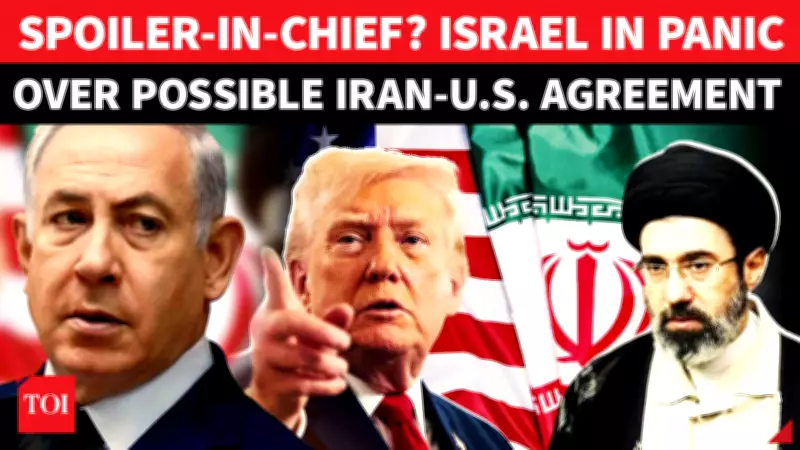
Israeli officials are raising alarm over the emerging US-Iran agreement, arguing it fails to confront Iran's missile programme, regional proxies and long-term strategic ambitions. Prime Minister Benjamin Netanyahu's government fears the deal could curb Israel's operational freedom in Lebanon and across the Middle East.
US-Iran Talks Progressing, But Sticking Points Remain
While Trump administration officials say negotiations are advancing positively, major sticking points remain over nuclear inspections, uranium controls and Hezbollah's role in any ceasefire framework. The potential agreement has sparked a rift between Washington and Tel Aviv, with Israeli leaders expressing deep concerns about the terms being discussed.
Israel's Strategic Concerns
According to reports, Israeli defense chiefs believe the emerging deal does not adequately address Iran's ballistic missile development or its support for proxy groups like Hezbollah and Hamas. Netanyahu's government has long insisted that any nuclear agreement must include strict limits on Iran's missile capabilities and a dismantling of its regional influence network.

Israeli officials have privately warned that the deal could legitimize Iran's nuclear program while leaving its conventional military threats intact. The IDF is reportedly preparing contingency plans in case the agreement limits Israel's ability to conduct preemptive strikes against Iranian targets in Syria and Lebanon.
Trump Administration's Position
US officials have downplayed Israeli concerns, emphasizing that the negotiations are focused on preventing Iran from obtaining nuclear weapons. However, the lack of progress on Hezbollah's disarmament and Iran's missile program has become a major point of contention.
Reports suggest that Marco Rubio, a key figure in the Trump administration, recently hinted at a major Iran breakthrough during a high-stakes visit to India. Meanwhile, Trump has reportedly frozen out Netanyahu from secret Iran talks, exacerbating the US-Israel rift.
Regional Implications
The potential deal has broader implications for the Middle East. Israel fears that a weakened US stance could embolden Iran and its proxies, leading to increased instability. Hezbollah's role in any ceasefire framework remains unresolved, with Israel insisting on the group's disarmament as a precondition for any broader regional agreement.
As negotiations continue, the situation remains fluid. Israeli officials are closely monitoring developments and pressing Washington to include stricter provisions on Iran's missile program and regional activities. The coming weeks will be critical in determining whether a final agreement can be reached that satisfies both US and Israeli security concerns.