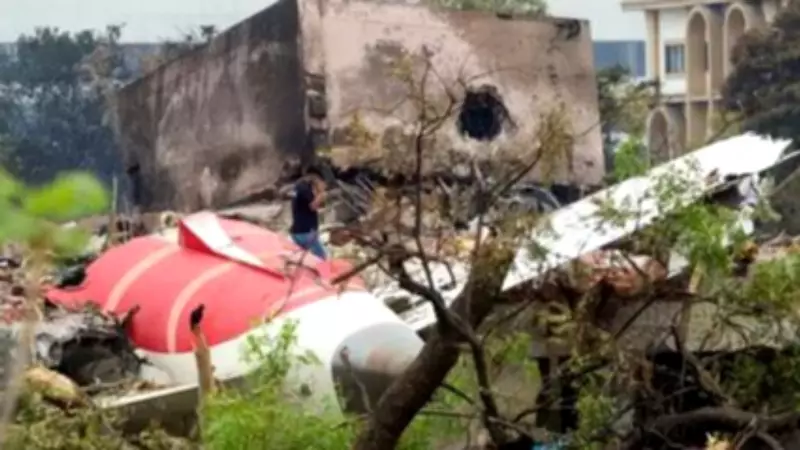
The Federation of Indian Pilots (FIP) has alleged that the Aircraft Accident Investigation Bureau's (AAIB) preliminary report on the Air India flight 171 crash deliberately omitted cockpit warning data that would have indicated an electrical failure preceding the loss of both engines. The pilots' association stated that independently commissioned simulator tests have exposed timing errors that further undermine the report's findings. FIP said it had written to the government requesting that AAIB conduct simulator tests before releasing the final report on the June 12, 2025, accident.
Allegations of Omitted Data
At a press conference on Friday, FIP President Captain C Randhawa argued that an electrical failure, as the federation has long alleged, would have triggered a cascade of caution messages accompanied by audio alerts, all of which would have been recorded on the cockpit voice recorder. He alleged that the preliminary report chose not to reproduce that warning sequence. Randhawa also questioned why the flight data recorder, installed in the tail of the aircraft, was extensively damaged when the tail was largely found intact. He noted that this recorder is solely powered by electricity and implied that the damage indicated a problem with the aircraft's electric power supply.
Simulator Tests Contradict Report
Randhawa stated that FIP commissioned 10 tests on a Boeing 787 simulator after AAIB declined repeated requests to conduct its own replication. The tests found that the Ram Air Turbine (RAT), the emergency power supply, takes 18 seconds to deploy and restore hydraulic pressure after engine shutdown. This directly contradicts the preliminary report's timeline, which claimed the RAT deployed four seconds after fuel control switches were moved to cut off fuel supply to the engines.

Reference to 'Miracle on the Hudson'
Captain Randhawa invoked the 2009 'Miracle on the Hudson' event, when a US Airways flight landed on the Hudson River shortly after take-off. The US investigating agency initially blamed Captain Chesley 'Sully' Sullenberger for choosing to ditch in the river. However, after running 30-35 simulator tests, they learned that the aircraft could not have made it back to the runway on time and landed safely. It was only then that Captain Sullenberger, who was alive to defend himself, was cleared. 'Here we have captains who have died. No one is there to protect them,' said Captain Randhawa.