Film Controversy Revives Painful Memories of Punjab's Dark Era
The controversial release and subsequent removal of the Diljit Dosanjh-starring film "Satluj" has reignited debate over Punjab's dark period (1978-93), when large-scale killings, involuntary migrations, and human rights violations occurred. While supporters of the film oppose its removal, critics argue it presents only one side of the picture. A political blame game has erupted, with all parties surprised that the movie was allowed on an OTT platform only to be taken down within 48 hours.
With state Assembly elections approaching, political stakes are high. Parties are using the controversy for advantage, paying lip service to victims of that era's violence.
The Case of Jaswant Singh Khalra
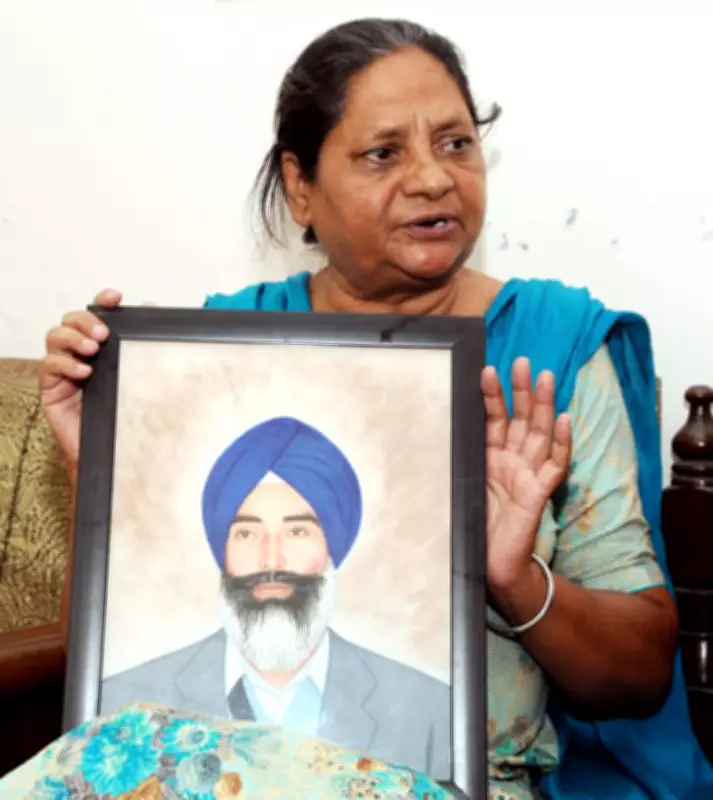
The film revolves around the kidnapping of Jaswant Singh Khalra from his residence in Kabir Park, Amritsar, on September 6, 1995, and his subsequent disappearance. Khalra, a Communist-turned-Akali human rights activist, was investigating the cremation of unclaimed bodies of persons killed by police in real or fake encounters. He reportedly recorded over 2,000 cases of "unclaimed bodies" cremated by police. No information about Khalra has emerged since; eyewitnesses claimed and gave evidence that he was murdered by police.

During this period, both the state structure and militant groups were criminally involved in human rights violations. Thousands of families bore the brunt, with members disappearing, killed, injured, or kidnapped. Many were forced to migrate, suffering untold miseries. The bitter experiences still disturb affected families, as memories haunt survivors. Though peace was restored after one and a half decades, for these victims, the nightmare continues. They remain unable to fathom why they suffered so much.
Forgotten Victims
The most unfortunate part is that these victims have been conveniently forgotten by all concerned — the state, political parties, and civil society, according to the author Jagrup Singh Sekhon.
Origins and Scale of Violence
The violence began on April 13, 1978, with a bloody conflict between followers of the Sant Nirankari Mission and adherents of Akhand Kirtani Jatha and Damdami Taksal, Mehta. It acquired serious dimensions in subsequent years. It is estimated that more than 25,000 people were killed and many thousands injured during this period. Killings were accompanied by numerous incidents of kidnapping, extortion, involuntary migration, and molestation and rape of women, creating pervasive fear and insecurity.
The state structure sanctioned legitimacy to the use of power to control terrorism, arguing that harsh laws or human rights violations were necessary. This argument was coercive and dehumanising, snatching citizens' right to life, dignity, and freedom.
State Repression and Torture Centres
In 1991, Punjab was declared a "disturbed" state, giving security forces extensive powers, including detention without court approval. Notorious torture centres were set up, such as Beeco Interrogation Centre in Batala, Mall Mandi in Amritsar, and Ladha Kothi in Sangrur, in addition to existing police stations. Methods of torture allegedly used included hanging people from the ceiling, using people as human swings, pulling legs wide apart to cause pelvic injury, rolling iron or wooden bars across thighs, beating genitals, inserting chilli powder into rectum and sensitive body parts, and administering electric shocks. Elderly women and young girls did not escape this brutality.
According to a National Human Rights Commission report, police registered 17,529 cases under the Terrorist and Disruptive Activities (Prevention) Act (TADA) in Punjab between 1985 and 1994. The law sanctioned extra-judicial kidnappings and killings, known as 'encounters', 'custodial deaths', and disappearances from police custody while coming from or going to court appearances.
Estimated Deaths and Disproportionate Impact
Reported estimated killings during 1981-93 were 21,667 (11,700 civilians, 1,776 security personnel, and 8,191 militants). But the actual number was much higher and remained unreported in public records. The numbers of Sikhs, particularly Jat Sikhs, who became victims of violence on both sides were disproportionately high relative to their population.

Police oppression was such that in many cases, arrest of terrorists/suspected persons for prosecution and trial was unnecessary. A national newspaper reported that Punjab's irrigation canals had become dumping grounds for bodies of militants. The government of Rajasthan complained to then Punjab Chief Secretary that canals were carrying large numbers of dead bodies with hands and feet tied. Newspaper reports also stated that many bodies with hands and feet tied were fished out when water inflow in canals was stopped for repairs.
These excesses and human rights violations were later acknowledged when more than 600 policemen — from constable upwards — faced charges of gross human rights violations in various courts of the country.
Militant Violence
At the same time, militants also indulged in human rights violations using coercive and dehumanising methods, often similar to those used by police. Their methods included murder by gunning down people, assassination of political leaders, family members of policemen, security forces, and prominent personalities, bombing of public places and houses of innocent people, kidnapping of targeted persons, hijacking of aircraft, bank robberies, raids, and extortion for money.
Kidnapping was one of the most traumatising actions of terrorists after killings, explosions, bombing, and threats. It was a major source of income for militant groups and provided an incentive to join. It was also used to put pressure on targeted enemies to get demands conceded. The brutality by captors and fear of death haunted victims every moment, rendering their lives horrible. Armed and sometimes masked terrorist groups threatened them with dire consequences if demands were not met. Victims were normally left to fend for themselves, and many preferred to pay money rather than risk their lives. Traumatised and threatened, a majority did not inform police for fear of more trouble.
Long-term Impact on Society
The fear generated by both the state (police/paramilitary) and militant groups badly affected the social, economic, and political fabric of society. Punjab is still paying the price of that violence. It brought about alienation of people from mainstream politics and caused havoc in the social structure. It produced tragedies as people became victims of violence from both sides.
In this context, there is a need to give a balanced perspective on the events of the days of militancy in Punjab, the author concludes.