

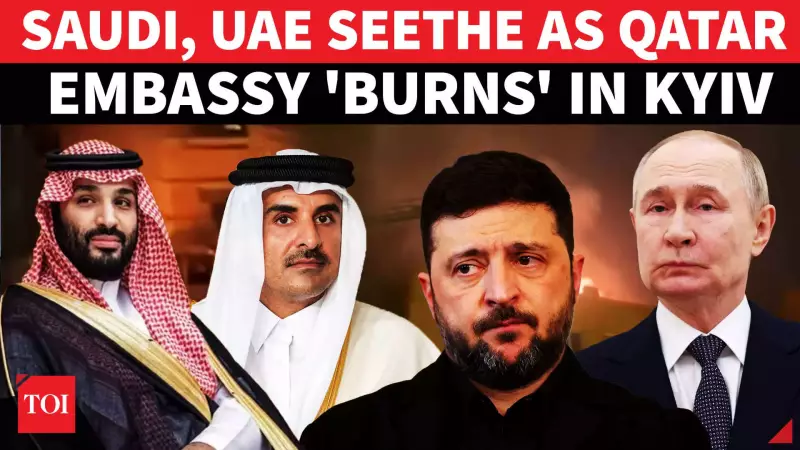
In a major diplomatic flare-up amid the ongoing conflict, the Qatari Embassy in Kyiv sustained damage during a massive overnight Russian aerial assault, prompting sharp reactions from the Gulf and Arab world. While Moscow flatly denies targeting the diplomatic mission, blaming a wayward Ukrainian interceptor, Kyiv has accused Russia of a dangerous escalation.
Conflicting Narratives Over Embassy Damage
The incident occurred on January 11, 2026, during what Ukrainian President Volodymyr Zelensky described as one of the largest aerial barrages in months. Zelensky stated the embassy was hit amid an attack involving an Oreshnik hypersonic missile, over 200 drones, and multiple cruise missiles launched across Ukraine.
However, the Russian government has presented a starkly different account. Officials in Moscow insist their forces did not target any diplomatic missions. Instead, they claim the damage to the Qatari Embassy was caused by a malfunctioning Ukrainian air defence interceptor that veered off course. Russian authorities emphasised that Qatar remains a priority partner and friendly state.

Kyiv's Accusation and Regional Reaction
Ukraine has strongly rejected Russia's version of events. Officials in Kyiv highlighted Qatar's crucial role as a mediator in past prisoner exchanges between the two warring nations, calling the strike on its embassy a provocative act that threatens diplomatic channels.
While confirming it carried out large-scale strikes, Russia framed the operation as retaliation for an alleged Ukrainian attack on a presidential residence in the Novgorod region. Moscow stated its targets were strictly Ukraine's energy infrastructure and drone production facilities.
The response from the Gulf has been one of measured concern. Qatar expressed regret over the damage to its diplomatic property but notably stopped short of directly blaming Russia. The Gulf Cooperation Council (GCC) and several Arab nations also voiced their worry over the incident, issuing statements that called for the protection of diplomatic missions under international law without explicitly assigning blame.
A Dangerous Escalation in Wartime Diplomacy
This event marks a significant moment, potentially complicating the delicate diplomatic landscape surrounding the war. The involvement of a neutral mediator like Qatar, which has previously facilitated talks, introduces a new layer of tension. The cautious statements from Arab capitals reflect a desire to avoid direct confrontation with Russia while upholding the principle of diplomatic immunity.
The aftermath leaves a key question unresolved: whether the embassy damage was a deliberate strike, a tragic accident of war, or the result of a failed interception as claimed by Moscow. The incident underscores how the relentless conflict continues to risk spilling over and damaging international relations beyond the immediate theatre of war.






