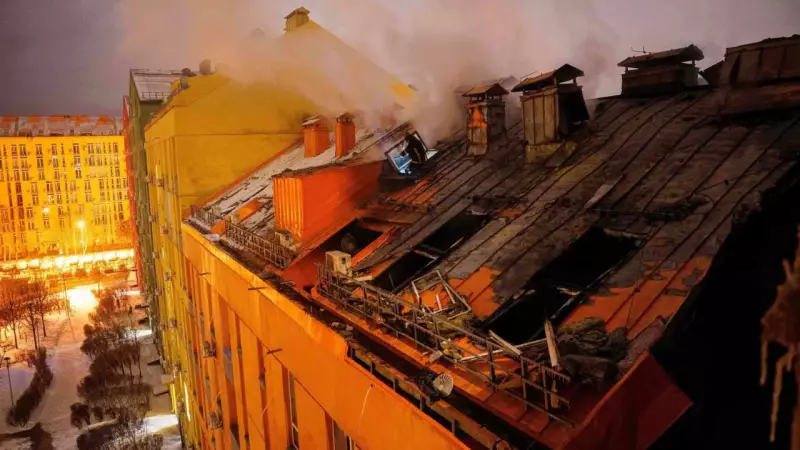
Ukrainian President Volodymyr Zelenskyy has reported a devastating and "massive" overnight Russian assault targeting the capital Kyiv and multiple other regions. The attack, which occurred during a severe cold spell with temperatures plunging below minus 10 degrees Celsius, caused significant damage to residential buildings, critical energy infrastructure, and even the Embassy of Qatar.
Scale and Details of the Overnight Assault
President Zelenskyy provided a detailed breakdown of the weapons used in the coordinated attack. He stated that Russian forces launched a staggering 242 drones, 13 ballistic missiles, 22 cruise missiles, and one Oreshnik medium-range ballistic missile. The primary targets of this barrage were energy facilities and civilian infrastructure, a move Zelenskyy condemned as deliberately timed to coincide with freezing temperatures to maximise civilian suffering.
"The attack took place exactly when there was a significant cold spell. Aimed precisely against the normal life of ordinary people," the President emphasised. Ukrainian authorities confirmed that Kyiv and its surrounding region bore the heaviest impact of the strikes.

Civilian Casualties and Damage to Diplomacy
The human cost of the attack was severe. At least four people were killed in Kyiv, including a member of an ambulance crew. Dozens more were injured across the affected areas. Interior Minister Igor Klymenko accused Russia of deliberately conducting a second strike on a residential building precisely when first responders were at the scene providing aid after an initial hit.
In a significant diplomatic incident, the building housing the Embassy of Qatar in Kyiv was damaged by a Russian drone. Zelenskyy highlighted the irony, noting that Qatar is a state actively mediating with Russia for the release of prisoners of war and civilians. The strike on diplomatic premises underscores the widespread nature of the assault.
Humanitarian Crisis and International Appeals
The consequences of targeting energy infrastructure in winter are dire. The attacks left tens of thousands of people without electricity, heating, or water as the deep freeze set in. Interior Minister Klymenko stated that Russia's clear goal was to deprive Ukrainian civilians of basic services during the harshest season.
In response, Ukrainian Foreign Minister Andrii Sybiha urged international partners to take decisive action. He called for the global community to condemn the attacks, impose tougher sanctions on Moscow, and significantly increase military assistance to Ukraine. Sybiha warned that Russia was choosing "war, terror, and barbarism instead of diplomacy."
Amid the grim news from the home front, President Zelenskyy also pointed to mounting Russian losses on the battlefield. Citing Ukrainian military figures, he suggested that tens of thousands of Russian troops have been killed in recent months, indicating that Moscow's current recruitment strategies may be becoming unsustainable.