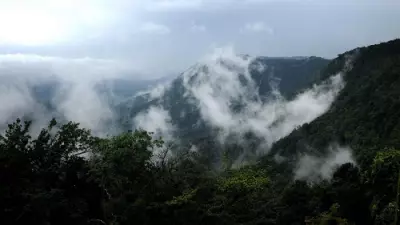
The Supreme Court has directed the authorities to implement a time-bound eviction plan to clear all encroachments in the ecologically sensitive Agasthyamalai landscape. The court expressed serious concern over the alarming number of illegal structures, including 116 government and public utility buildings, that have come up inside forest lands without any approval.
Court's Directive on Encroachments
A bench of the Supreme Court emphasized the need for immediate action to restore the forest area. It ordered the Tamil Nadu government and the forest department to submit a detailed timeline for the removal of all encroachments. The court also sought a status report on the steps taken to prevent further illegal constructions in the region.
Government Structures Under Scrutiny
The court noted that among the encroachments, 116 structures belong to government departments and public utilities. These include buildings constructed for administrative purposes, which were allegedly built without the mandatory environmental clearances. The bench remarked that such actions undermine the conservation efforts in the Agasthyamalai landscape, a biodiversity hotspot.

Background of the Case
The matter came to light through a petition highlighting the rampant encroachment in the Agasthyamalai region, which is part of the Western Ghats. The area is home to several endangered species and is crucial for water security in the region. The Supreme Court had earlier issued notices to the state government and other authorities seeking their responses.
Next Steps
The court has fixed the next hearing for July 2026, by which time the state government is expected to present a concrete action plan. The bench also directed the deployment of satellite imagery and modern surveillance techniques to monitor the progress of eviction and prevent fresh encroachments.
Environmental activists have welcomed the court's intervention, calling it a significant step towards protecting the fragile ecosystem of Agasthyamalai. They have urged the authorities to ensure that the eviction process is carried out without harming the local tribal communities who have legitimate rights over the forest land.