

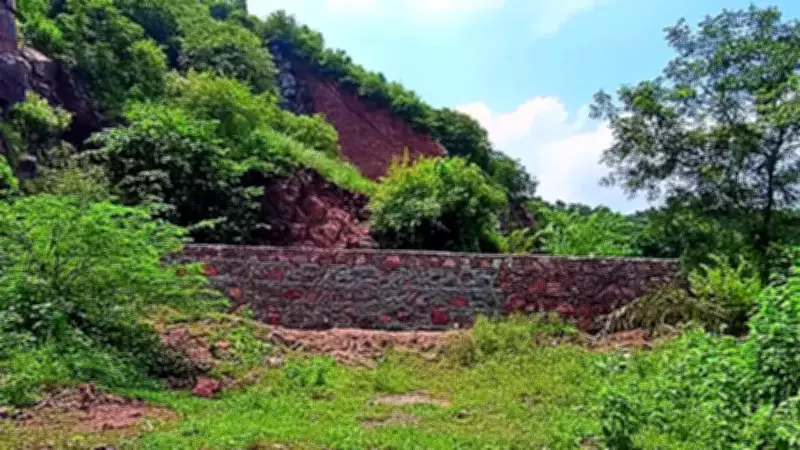
The Supreme Court on Monday reserved its judgment on the composition of a High-Powered Expert Committee (HPEC) tasked with redefining the Aravali Hills and Ranges, their extent, and forest cover. This comes five months after the court kept in abeyance its earlier judgment that accepted a 100-metre elevation definition for the Aravali range.
Arguments on HPEC Composition
Appearing for the Ministry of Environment, Forest and Climate Change, Additional Solicitor General Aishwarya Bhati supported the recommendations of the Central Empowered Committee (CEC) to appoint Kanchan Devi, Director General of the Indian Council of Forestry Research and Education, as the chairperson of the HPEC. Bhati informed the bench that the CEC and amicus curiae, senior advocate K Parameshwar, had suggested four common names for inclusion as members: Dr Subhash Ashutosh, former Director General of the Forest Survey of India; Dr Rajendra Kumar Sharma, former Director of the Geological Survey of India; Dr C N Pandey, former Principal Conservator of Forests of Gujarat; and Dharmendra Prakash, former Principal Chief Conservator of Forests of Nagaland.
Court's Observations on Committee Size
A bench comprising Chief Justice Surya Kant and Justices Joymalya Bagchi and Vipul M Pancholi noted that the HPEC cannot be a very large body, as that would make it unwieldy and difficult to convene meetings. However, the court clarified that the committee would be free to seek opinions, suggestions, and views from expert institutions as needed and could co-opt other domain experts for specific purposes during the study of topography, geography, and vegetation while preparing its report.

Senior advocate A S Nadkarni argued that legal mining by holders of valid licenses should be permitted during the interim period. However, the bench rejected this plea, stating that allowing mining would create confusion and that it would be better to wait until the HPEC submits its report to the court.
Background of the Case
On December 29 last year, a bench led by Chief Justice Kant took suo motu cognisance of concerns raised by environmentalists over the Supreme Court's November 20 judgment that accepted the 100-metre elevation definition for Aravali Hills. The court had ordered a stoppage of all mining activities and the grant of renewal or new mining leases in the Aravali region. Indefinitely keeping in abeyance the operation of the November 20 judgment, the bench stated: "This stay shall remain in effect until the present proceedings reach a state of logical finality, ensuring that no irreversible administrative or ecological actions are taken based on the current framework." Since then, the Supreme Court has steadfastly refused to permit any mining activity in the Aravalis.






