In a significant escalation of military pressure, Taiwan's defence ministry reported detecting a large-scale Chinese military presence around the self-ruled island on a recent Sunday. The activity included a substantial number of aircraft and naval vessels, marking a continued pattern of shows of force by Beijing, which claims Taiwan as its own territory.
Details of the Chinese Military Incursion
The Ministry of National Defence (MND) in Taipei stated that from the morning of Sunday, April 28, until 6 am on Monday, April 29, its surveillance systems had identified 23 Chinese military aircraft and 6 People's Liberation Army Navy (PLAN) vessels operating around Taiwan. The ministry noted that 17 of the detected aircraft crossed the symbolic median line of the Taiwan Strait, an unofficial boundary that had long served as a tacit buffer zone.
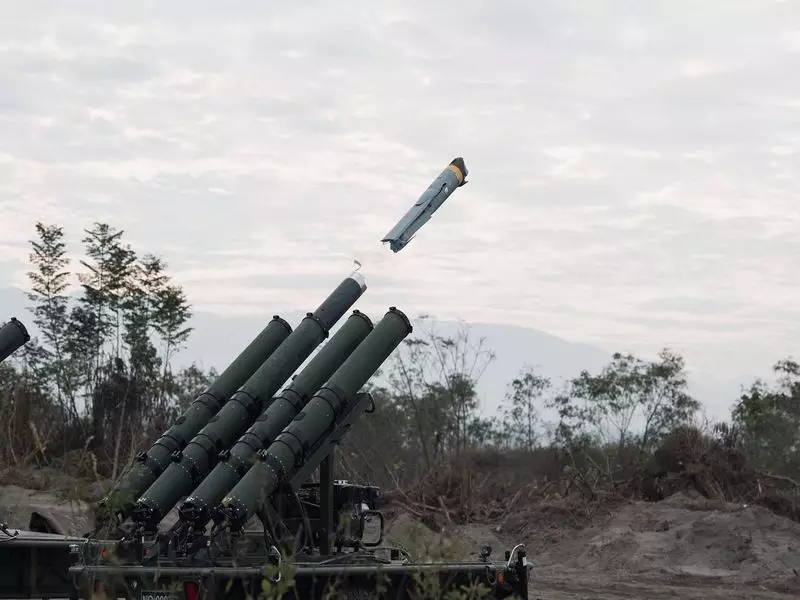
Furthermore, the aircraft entered Taiwan's southwestern and southeastern Air Defence Identification Zone (ADIZ). In response to this incursion, Taiwan's armed forces monitored the situation closely and deployed appropriate forces, including combat air patrol aircraft, navy vessels, and land-based missile systems, to shadow the Chinese movements and issue radio warnings.

Context and Rising Tensions
This latest incident is part of a persistent pattern of increased Chinese military activity in the region. Beijing has been conducting such operations on a near-daily basis for several years, often framing them as "combat readiness patrols" intended to counter what it calls "collusion" between Taiwan's government and external forces, primarily the United States.
The timing of such drills is frequently seen as a political signal. While the immediate trigger for this specific deployment was not specified in the report, these manoeuvres consistently reinforce China's stance that it has not renounced the use of force to achieve what it calls "reunification." Taiwan's government, led by the Democratic Progressive Party (DPP), strongly rejects China's sovereignty claims, maintaining that only the island's 23 million people can decide their future.
Regional Implications and Responses
The regular transit of Chinese military assets through strategic waterways and airspace around Taiwan significantly raises the risk of accidental clashes or miscalculations. The Taiwan Strait is a critical global shipping lane, and any conflict would have severe repercussions for regional stability and the world economy.
Taiwan's defence ministry has consistently urged the public to remain confident in its capabilities to defend the island's sovereignty and security. The international community, particularly the United States and Japan, closely monitors these developments. The U.S., bound by the Taiwan Relations Act, continues to provide Taiwan with defensive arms and has repeatedly called for peace and stability across the strait, opposing any unilateral changes to the status quo.
This ongoing military pressure underscores the fragile and volatile nature of cross-strait relations, with Beijing demonstrating its capability to impose a form of aerial and maritime blockade at will. Analysts suggest these actions are designed to exhaust Taiwan's military, test its responses, and gradually normalise the presence of PLA assets in areas Taipei considers its own, thereby eroding its operational space and sovereignty claims over time.