Welcome back to another edition of My Take 5. This week we cover UAE's exit from OPEC, how Ukraine takes the war to Russia, King Charles' successful US trip, Syria's transitional justice, and China's coercion of three African countries to block overflight of Taiwanese President. Let's get to it.
UAE to Exit OPEC
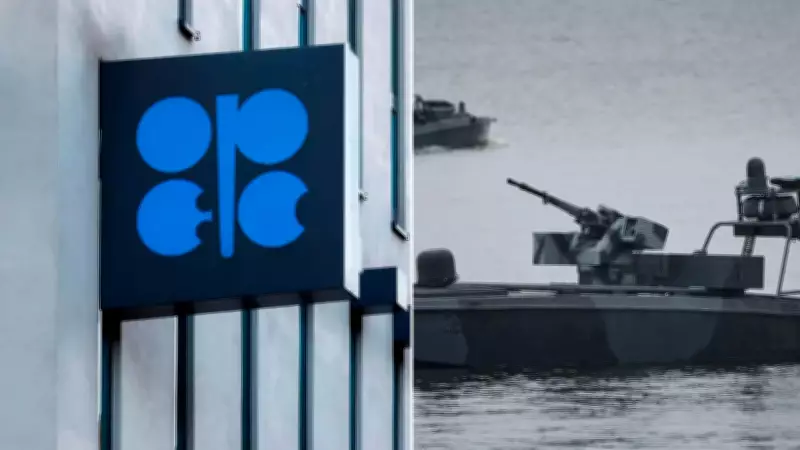
In a major move, the United Arab Emirates has announced its decision to exit the OPEC oil cartel by May 1. This comes as a serious blow to the group amid the ongoing double blockade in the Strait of Hormuz, through which 20% of global oil supplies flowed before the outbreak of the Iran war. The UAE, which has the second-largest spare oil production capacity within OPEC, may be taking a calculated risk. Within OPEC, it was subjected to group quotas that prevented it from realizing its full potential of oil revenue streams. With that restraint gone, the UAE can theoretically ramp up its own independent production, which could depress global oil prices. However, none of this will happen until Hormuz is opened up. Even if the UAE plans new pipelines to ship out its oil, reducing dependence on sea tankers, it still must contend with the logjam in Hormuz and Iranian threats. The latter appears to be the prime motivation for the UAE's move. The UAE has complained that the Gulf Cooperation Council (GCC) simply did not do enough to protect it during Iranian drone and missile attacks on the Emirates. Surprisingly, Iran has targeted the UAE more than even Israel during this conflict. Add to this the ongoing strategic friction between Abu Dhabi and Riyadh. The Saudis and Emiratis have recently found themselves championing opposing interests in the Yemen and Sudan conflicts. Therefore, the UAE naturally no longer wants to be in Saudi Arabia's shadow within OPEC, nor does it want to sit with Iran within the grouping. It may even pull out of the GCC at a future date. This will hand an advantage to the US and Israel, with the UAE already joining the Abraham Accords to normalize relations with Tel Aviv. The strategic calculus of the Middle East is surely changing.
Ukraine Makes Russia Jittery
Russia is scaling back its May 9 Victory Day parade and will not display its usual military hardware. Russia's decision appears influenced by fears of Ukrainian strikes against Russian military platforms during the parade, with the Russian defense ministry citing the 'current operational situation' to justify its decision. Ukrainian drones and missiles have been striking deeper inside Russian territory in recent months. Kyiv's growing drone and robot army is visibly having an impact on the frontline, with Russia unable to recruit enough soldiers to replace its manpower losses on the battlefield. Ukraine has been relentlessly targeting Russian energy infrastructure to deny Moscow the benefits of elevated global oil prices, which would fund the Russian war machinery against Ukraine. This is exemplified by Ukraine's repeated targeting of Russia's Tuapse refinery on the Black Sea in recent weeks. Russia has continued its own bombardment against Ukrainian cities, civilian infrastructure, schools, kindergartens, hospitals, shopping malls, hotels, and residential buildings on a daily basis. Odesa was struck overnight on April 30, injuring at least 20. Interestingly, Russia is now asking for a temporary truce around its Victory Day celebrations. Is it fear or another cynical ploy? Ukraine has long proposed a long-term ceasefire that Putin has repeatedly rejected. Tragically, the war carries on because of one party – Russia.


King Charles in the US
In a surprisingly superb diplomatic outreach, King Charles' state visit to the US has pulled off a strategic coup for the UK. US-UK ties had plummeted in recent weeks over sharp differences regarding the Iran war – the UK refused to allow the US to use British bases for strikes against Iran. Charles' assignment was to win Washington back, and he delivered. Using brilliant speeches – most notably in the US Congress, where he received 12 standing ovations – humor, and even some classic British putdowns, Charles charmed Trump and American lawmakers, reaffirmed the Trans-Atlantic alliance and NATO, burnished the edifice of joint US-UK historical relations, reinjected faith in bilateral strategic ties, and put bilateral relations back on an even keel. Most notable was Charles' use of humor. His light-hearted repartee directed at Trump's earlier statement that Europe would be speaking German had it not been for the US, with his own jest that it is the US that would be speaking French had it not been for the British, landed punches with a velvet glove. Charles also reaffirmed the foundations of democracy, the principle of separation of powers, harked back to Magna Carta and US Supreme Court rulings, and made the case for defending Ukraine against Russian aggression. Everything was neatly tied up and delivered with class. Perhaps the British monarchy still holds some strategic value for the UK. In an uncertain world, if the British government finds it difficult to pursue its interests, the British monarchy can still be the perfect foil to open doors and repair relationships for London. Charles really aced this assignment.
Syria's Transitional Justice
In a big moment for Syria's transition, the first transitional justice trial began in Damascus this past week. The accused is former Major General Atef Najib, a cousin of former Syrian dictator Bashar al-Assad and former head of the political security branch in Daraa. Najib is accused of murder and ordering the shooting of protesters during the 2011 Syrian protests. While several ex-regime people await trial, Najib's trial will be followed closely for both due process of law and the final outcome. There is no denying that several members of the Assad regime engaged in brutal suppression of protests during the Syrian revolution. When the latter morphed into a bloody civil war, Assad called in Russia for support, which carried out brutal attacks against the rebels. The decade-long destruction that Syria witnessed killed hundreds of thousands, displaced millions, and destroyed whole towns and cities. It will be a long road to recovery for Syria, both emotionally and physically. With Assad fleeing to Russia in December 2024 as al-Sharaa's forces swept through Syria, the country's nightmare finally came to an end. However, even al-Sharaa's transition government will have to pass the democracy smell test. Syria is a multi-ethnic, multi-faith country. Diverse groups such as the Kurds, Druze, Arab Sunnis, and Alawites must be brought together and given fair, equal representation in the new Syrian state. Otherwise, Syria risks slipping back into turmoil.
Taiwan President's Cancelled Africa Tour
Taiwan's President Lai Ching-te (William Lai) was forced to cancel his state visit to the African nation of Eswatini this past week due to a troubling Chinese ploy. Eswatini is the only African country that maintains official diplomatic relations with Taiwan. However, Lai could not make the trip because three countries – Mauritius, Seychelles, and Madagascar – cancelled overflight permission for Lai's flight. This is unprecedented. Lai is not the first Taiwanese President to visit Eswatini – Tsai Ing-wen did in 2023. But this time, according to reports and statements from Taiwan's Ministry of Foreign Affairs, China arm-twisted Mauritius, Seychelles, and Madagascar by threatening to revoke debt relief for them if they did not block Lai's flight. This clearly shows the extent to which China is willing to go to curtail Taiwan. China continues to militarily threaten the island nation and repeatedly push for reunification despite the vast majority of Taiwanese being against this. China is a bully, plain and simple. If bullies are not challenged, they only grow bolder. That is what appears to be happening with China. Taiwan must be supported against China's bullying tactics. Otherwise, East Asia may see a Ukraine-like situation play out in its region.