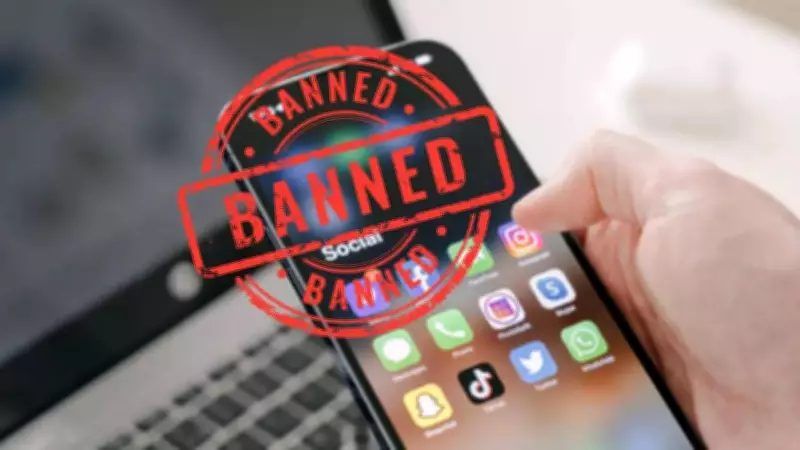
The UK government's announcement that under-16s will be banned from using social media from spring 2027 has drawn mixed reactions. While some welcome the curbs, others argue that age-gating will not be effective. Victoria Nash, associate professor and senior policy fellow at the Oxford Internet Institute, points out that social media is also where children find community and support. She told the Sunday Times that governments should focus on holding platforms accountable instead.
Global Movement Gains Momentum
The number of countries with social media curbs on teenagers has reached 12, making it less a knee-jerk reaction and more a global movement. Two positive impacts are possible: focusing public and corporate attention on ensuring social media platforms support young people's interests, and a gradual change in norms and practices around the use of such services for younger teens.
Effectiveness of Bans
Bans are unlikely to be completely effective in preventing all social media harm because there will always be ways to circumvent them. The assumption is that highly effective age verification will prevent most under-age use, but technical measures can be bypassed through social work-arounds, such as using a sibling or friends to pass facial age checks or borrowing credentials. UK leaders recognize this limitation and argue transparently that reducing risks for some children is better than nothing.

Learnings from Australia's Ban
The eSafety Commissioner's compliance report from March 2026 indicated that for families where children under 16 had previously held social media accounts, 70% still had access. The main reason was that many children had not been asked to prove their age. There are also reports that under-16s were starting to use lesser-known social media platforms or finding ways to cheat age verification. The key learning is the need to ensure platforms comply fully with the laws, but this is also a reminder that such bans are not a silver bullet and other protective measures are still needed.
Evidence of Social Media Harm
In May, a US court held that some companies had design defects making their platforms addictive to children. However, academic evidence on whether social media worsens young people's mental health is complex and mixed. Some young people have had terrible experiences, likely exacerbated by social media use, but proving causality is difficult. Different young people respond differently to similar online experiences. There is evidence that social media can support well-being, particularly for minority or excluded youth who find community online, and it is an important source of information and learning. Nash warns against broad, unqualified claims that social media causes harm.
Risks and Unintended Consequences
Nash has two main concerns. First, the ban is fundamentally disempowering for young people, excluding them from spaces instead of supporting them to become resilient and autonomous. Second, it may make it harder to hold social media companies accountable for their treatment of children, as they will be off the hook for providing safe spaces for these age groups.
Influence of Shows Like 'Adolescence'
UK Prime Minister Starmer is said to have been deeply influenced by the show 'Adolescence'. Such shows are helpful in encouraging public conversation, but they often present a one-sided view. It is important to discuss risks while also recognizing the opportunities and importance of technology in young people's lives for communication, identity development, and education.
Balanced Approach for India
India has not yet announced a ban, but some states have expressed support. Nash had come around to the possible benefits of the UK's 'duty of care' approach, which imposes significant duties on companies to minimize risk and improve online opportunities for young users. She would have liked to see more countries uniting around such an approach.

Trust Deficit and Legislation
There is a trust deficit between parents and governments on one side and social media companies on the other. Governments and parents are right not to trust social media companies, as user engagement and profit have often been prioritized over well-being. The only way to rebuild trust is to put in place measured and proportionate regulation for all social media users, backed by strong enforcement, so that companies can be required to comply and seen to comply.