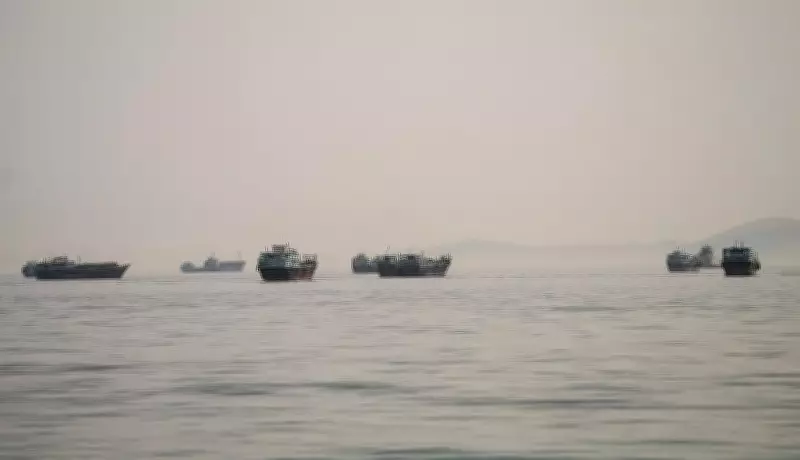
The United States military has contradicted Iran's claim that the Strait of Hormuz is closed, stating that commercial shipping continues to operate normally in the strategic waterway. The denial came hours after Iran's Islamic Revolutionary Guard Corps declared the strait shut on Saturday, escalating tensions in the region.
Iran's declaration and US response
Iran's Revolutionary Guard announced the closure of the Strait of Hormuz, a vital passage for about one-fifth of the world's oil consumption. However, the US military reported that commercial vessels were still transiting the waterway without interruption. A US official, speaking on condition of anonymity, said, "We have seen no disruption to commercial traffic in the Strait of Hormuz. The Iranian claim is inaccurate."
The dispute unfolds as negotiators from both nations are heading to Switzerland for talks aimed at de-escalating tensions. The Swiss talks are expected to address the status of the strait and broader maritime security concerns.

Strategic importance of the Strait of Hormuz
The Strait of Hormuz, located between Oman and Iran, connects the Persian Gulf with the Gulf of Oman and the Arabian Sea. It is a critical chokepoint for global energy supplies, with approximately 21 million barrels of oil passing through daily, according to the US Energy Information Administration. Any sustained closure could disrupt global oil markets and trigger price spikes.
Iran has previously threatened to close the strait in response to sanctions or military pressure. Saturday's declaration marks the most explicit such threat in recent years, though its practical effect remains limited given the US military's assertion of continued free navigation.
International reactions and next steps
The US Navy's Fifth Fleet, based in Bahrain, has increased patrols in the region to ensure freedom of navigation. A spokesperson said, "We are committed to maintaining the free flow of commerce and will take all necessary measures to protect shipping lanes."
Analysts view the Iranian move as a negotiating tactic ahead of the Swiss talks. "This is likely a pressure play by Iran to gain leverage," said a Middle East security expert. "The actual closure would be a major escalation, but the current situation suggests both sides are leaving room for diplomacy."
The talks in Switzerland are part of ongoing efforts to address a range of disputes between Washington and Tehran, including Iran's nuclear program and regional activities. No timeline for the negotiations has been announced.