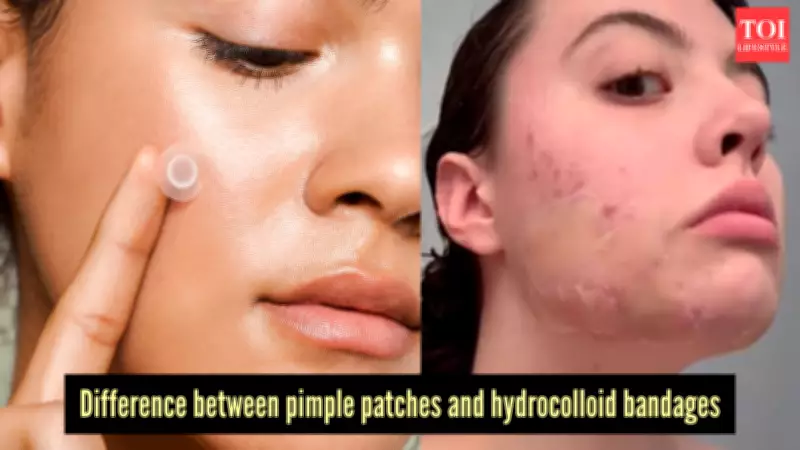
Hydrocolloid pimple patches and medical hydrocolloid bandages both leverage the same moisture-absorbing gel technology originally developed for hospital wound care. However, their suitability for facial acne varies significantly based on design and adhesive strength.
Hydrocolloid Technology: The Common Foundation
Hydrocolloid is a gel-forming material that draws out pus and fluid from whiteheads or open blemishes, creating a moist healing environment while shielding the area from bacteria. According to dermatological research, this accelerates tissue repair. A 2024 randomized controlled study cited in a recent review found that hydrocolloid patches significantly improved texture, redness, size, and elevation of extracted pimples over 14 days compared to standard face washing.
Pimple Patches: Precision for Facial Skin
Brands like COSRX, Sirona, and Some By Mi produce ultra-thin patches with tapered edges, allowing discreet wear under makeup. Their adhesives are formulated to be gentle on facial skin, peeling off easily without damaging the skin barrier. Many patches also contain active ingredients such as salicylic acid, tea tree oil, or niacinamide to enhance healing.

Hydrocolloid Bandages: Heavy-Duty and Cost-Effective
Standard hydrocolloid bandages, such as 3M Nexcare, are thicker, unmedicated, and designed for blisters or burns. They come in large squares or rolls, requiring cutting to size. This makes them economical for covering large clusters of breakouts or body acne. However, their adhesive is stronger and may irritate facial skin or compromise the skin barrier upon removal.
Clinical Evidence Supports Efficacy
A narrative review published by the National Institutes of Health confirms the dermatological benefits of hydrocolloids. The 2024 randomized controlled study demonstrated that patches reduce pimple elevation and redness more effectively than simple cleansing, supporting their use as a targeted treatment.
Final Verdict: Choose Based on Breakout Location and Sensitivity
For everyday facial breakouts, dedicated pimple patches are recommended due to their thinness, discretion, medicated options, and skin-friendly adhesive. For large areas of body acne or after popping a cluster of pimples, standard hydrocolloid bandages offer heavy-duty overnight protection at a lower cost. The choice depends on the breakout site and skin sensitivity.