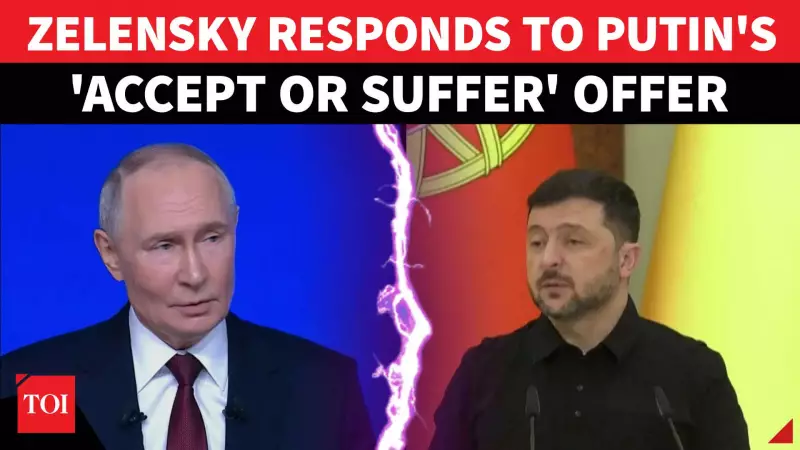
In a significant development in the ongoing conflict, Ukrainian President Volodymyr Zelensky has delivered a sharp rebuke to his Russian counterpart Vladimir Putin over the latter's comments on elections in Ukraine. The Ukrainian leader made it clear that the timing and conduct of any vote is a matter of solemn sovereign right for his nation, not a subject for negotiation with Moscow.
Putin's Proposal for a Voting Pause
The diplomatic flashpoint occurred on December 20, 2025, when Russian President Vladimir Putin, speaking in Moscow, put forward a suggestion. He indicated that Russia could potentially help ensure security for Ukrainian elections, even floating the idea of pausing military strikes on voting days. Putin also raised specific demands regarding the voting rights of Ukrainians residing inside Russia, framing the entire issue around the question of political legitimacy for any future Ukrainian government.
This offer from the Kremlin leader was presented as a conditional gesture, intertwining the prospect of a temporary ceasefire with a direct influence on Ukraine's internal democratic processes. The remarks were immediately perceived in Kyiv as a strategic manoeuvre rather than a genuine peace overture.

Kyiv's Swift and Firm Rejection
The response from Ukraine was both swift and unequivocal. President Zelensky and his administration dismissed Putin's suggestions as a blatant overreach and an infringement on Ukraine's sovereignty. Zelensky emphasised that the decision to hold elections, including their timing, security, and logistical framework, rests exclusively with Ukrainian state institutions and its citizens.
"Not your decision," was the core message from Kyiv directed at the Kremlin. Zelensky stressed that Putin, whose forces continue a full-scale invasion of Ukrainian territory, holds no authority to dictate the electoral calendar or procedures of a sovereign nation. The Ukrainian position underscores that genuine legitimacy stems from the free will of the Ukrainian people, exercised without external pressure or conditions set by an aggressor state.
Implications for the War and Diplomacy
This exchange highlights the deep chasm between the warring nations on fundamental issues of sovereignty and self-determination. Putin's proposal, seen by analysts as an attempt to shape the narrative and potentially destabilise Ukrainian politics from within, has been firmly shut down. The rejection reinforces Ukraine's stance that security and political normalisation cannot be discussed while Russian military aggression persists on its soil.
The incident also complicates any short-term prospects for diplomatic negotiations, demonstrating that even seemingly procedural matters like elections are deeply entangled with the core issues of the conflict. For the international community, including nations like India that follow the situation closely, it is a reminder of the entrenched positions that continue to define this prolonged war. The Ukrainian leadership's firm response signals its commitment to defending its democratic processes from any form of foreign dictate, especially from Moscow.