

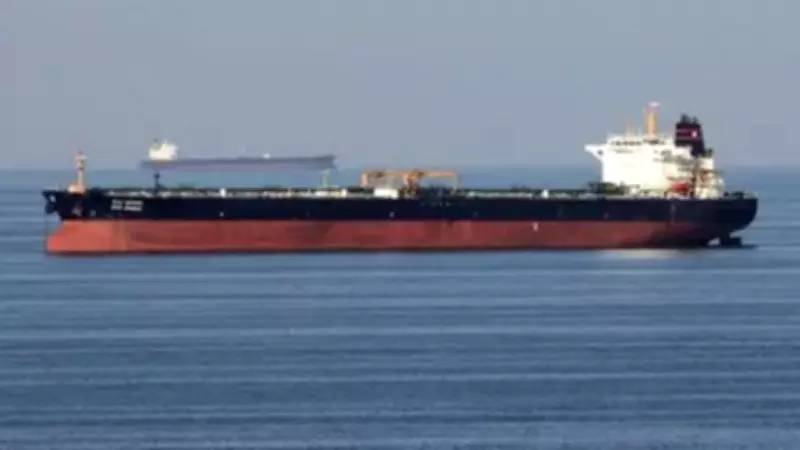
US-Iran Tensions Escalate as Ceasefire Talks Stall Amid Strait of Hormuz Clashes
In a dramatic escalation of maritime hostilities, Iran's joint military command has declared it will "respond soon" to the seizure of an Iranian-flagged cargo ship near the Strait of Hormuz, labeling the incident an "act of piracy." This development casts significant uncertainty over a fragile ceasefire in the Middle East, which is set to expire imminently.
US Seizure of Iranian Vessel Sparks Retaliation Threats
US President Donald Trump announced that the vessel, identified as Touska, was intercepted after it allegedly attempted to bypass a naval blockade. He described this as the first such action since restrictions on Iranian ports were imposed last week. According to Trump, a US Navy guided-missile destroyer operating in the Gulf of Oman disabled the ship before US Marines took it into custody to inspect its cargo.
Iranian media, however, has countered with claims that US troops were forced to retreat from the Strait of Hormuz following an attack on an Iranian ship. The Islamic Revolutionary Guard Corps (IRGC) asserted that US forces opened fire on the merchant vessel in an attempt to compel it back to Iranian territorial waters, leading to a drone launch toward US warships in the Sea of Oman.

Ceasefire Talks in Jeopardy as Iran Refuses Participation
The incident has severely undermined diplomatic efforts. Trump had earlier stated that US negotiators would travel to Pakistan on Monday for another round of talks with Iran, raising hopes of extending the ceasefire. However, Tehran has not confirmed its participation, with state broadcaster IRIB reporting that "there are currently no plans to attend the next round of Iran-US talks." This refusal is attributed to the ongoing US blockade of Iranian ports and the recent seizure, which Iran views as a violation of the ceasefire.
Broader Maritime Tensions and International Impact
Further complicating the situation, a French shipping company, CMA CGM, reported that one of its vessels, the Everglades, came under "warning shots" in the Strait of Hormuz on Saturday. No crew members were injured, but the International Maritime Organization confirmed the vessel sustained damage, highlighting the risks to international shipping in this critical waterway.
Iran's first vice president, Mohammad Reza Aref, emphasized the geopolitical stakes, stating on social media that "The security of the Strait of Hormuz is not free. One cannot restrict Iran's oil exports while expecting free security for others." He warned that continued pressure could have global consequences, particularly for energy markets.
Internal Shifts in Iran's Leadership
Analysts note a significant shift within Iran's power structure, with hardliners from the IRGC taking control of military and diplomatic decision-making. According to reports, IRGC commander Maj Gen Ahmad Vahidi and his circle have assumed a dominant role, influencing recent maritime confrontations and the decision to bypass peace talks. This internal consolidation may signal a more aggressive stance from Tehran in the coming days.
As tensions mount, the world watches closely, with the potential for further clashes threatening regional stability and international trade routes. The situation remains fluid, with both sides preparing for possible escalation.






