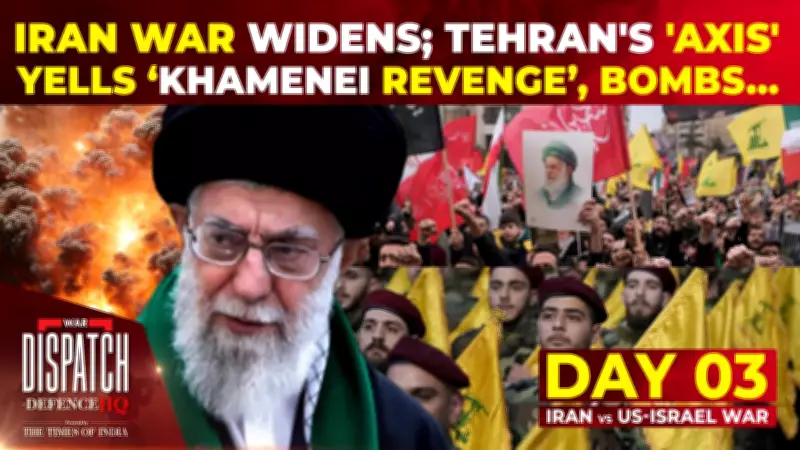
US-Iran War Escalates Into Regional Conflict on Day 3
The direct military confrontation between the United States and Iran has dramatically escalated, transforming into a widening regional war that is no longer contained. What began as targeted American strikes on Iranian territory has now exploded into a multi-front conflict, drawing in powerful regional actors and threatening global stability.
Axis of Resistance Activates Across Middle East
Iran's formidable "Axis of Resistance" network has been fully activated in response to the initial US attacks. This coordinated response has unleashed violence across multiple countries:
- Hezbollah launches rocket barrages at Israeli territory from Lebanon
- Israeli fighter jets retaliate with bombing raids on Beirut, Lebanon's capital
- Iran-backed Iraqi militias conduct strikes against American interests in Iraq
- US F-15 fighter jets are shot down over Kuwaiti airspace, marking significant American casualties
Global Oil Markets React to Strait of Hormuz Threat
The conflict's expansion has sent shockwaves through global energy markets, with oil prices surging as the strategically vital Strait of Hormuz emerges as the next potential flashpoint. This critical waterway, through which approximately 20% of the world's oil passes, now faces the threat of disruption or closure, creating immediate concerns about global energy security and economic stability.

Regional War Dynamics Intensify
The conflict has evolved beyond a bilateral confrontation into a complex regional war with multiple active fronts. The involvement of Hezbollah against Israel creates a northern front, while Iranian-backed forces in Iraq open a western front against American positions. The downing of advanced US fighter jets over Kuwait represents a significant escalation in military capabilities being deployed against American forces.
Military analysts note that the rapid expansion of hostilities suggests careful planning and coordination among Iran's regional allies, indicating this response was prepared well in advance of the initial US strikes. The activation of multiple proxy forces simultaneously demonstrates Iran's strategy of asymmetric warfare against superior American military power.
Humanitarian and Strategic Implications
The widening conflict raises immediate concerns about civilian casualties and regional stability. The bombing of Beirut marks a dangerous escalation in Israel-Lebanon tensions, while the involvement of Iraqi militias threatens to destabilize Iraq's fragile political balance. American casualties from the downed F-15 jets represent the most significant US military losses in the region in years.
Diplomatic efforts to contain the conflict appear to have failed as fighting spreads across national borders. The international community faces the challenge of preventing further escalation while addressing the immediate humanitarian consequences of the expanding warfare.
The situation remains fluid and dangerous, with all parties demonstrating willingness to engage in high-intensity conflict. The coming hours will be critical in determining whether this regional war can be contained or if it will continue to expand with potentially catastrophic consequences for Middle Eastern stability and global energy markets.