US-Israel-Iran Conflict Intensifies with Missile Strikes and Beirut Bombings
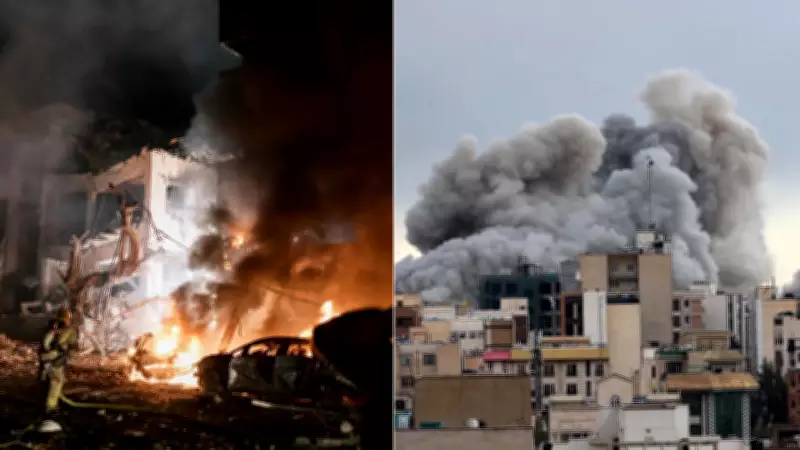
The ongoing conflict between the United States, Israel, and Iran has escalated dramatically, with Iran launching a massive missile and drone attack on a US airbase in Bahrain. Simultaneously, Israeli airstrikes have targeted Beirut, causing significant civilian displacement and raising fears of a prolonged regional war.
Iran's Retaliatory Strike and Regional Fallout
Iran's Islamic Revolutionary Guard Corps (IRGC) claimed responsibility for a massive drone and missile attack on the US airbase in Sheikh Isa, Bahrain. According to the IRGC, the strike involved 20 drones and three missiles, destroying the base's main command building and setting fuel tanks ablaze. This attack marks a significant escalation in Iran's response to the US-Israeli military campaign, which began with strikes killing Iran's Supreme Leader Ayatollah Ali Khamenei over the weekend.
In Lebanon, Israeli bombings have focused on Beirut's southern suburbs, particularly the Dahiyeh area, a known support base for Hezbollah. The attacks have triggered a large-scale humanitarian crisis, with thousands of civilians fleeing their homes. Traffic gridlock has ensued as residents attempt to evacuate, and many have been forced to sleep on the streets. Schools across Beirut have suspended classes, repurposing buildings to shelter displaced families.

US and Israeli Strategic Objectives and Ambiguities
US President Donald Trump has outlined four primary military objectives for the conflict, dubbed "Epic Fury" by the Pentagon. These goals include destroying Iran's naval and military capabilities, ending Tehran's support for regional militant groups, and preventing nuclear weapon development. However, Trump's strategy has faced criticism for its lack of clarity, with the president warning the conflict could last four weeks or longer while offering conflicting statements on regime change.
Israeli Prime Minister Benjamin Netanyahu emphasized that the war would be "quick and decisive," not dragging on for years. He stated that weakening Iran's military capabilities is a central aim, aligning with Israel's historical strikes in Syria and recent offensives in Gaza. Analysts like Matthew Kroenig of the Atlantic Council suggest Trump may already have achieved key goals, such as eliminating Khamenei, but the administration seeks to avoid a prolonged conflict akin to Iraq or Afghanistan.
Economic and Diplomatic Ramifications
The conflict has spurred a sharp rise in oil prices, with Brent crude futures climbing to $79.44 a barrel, a 2.2% increase, as fears of supply disruptions grow. Threats to shipping through the Strait of Hormuz have exacerbated market anxieties, with analysts warning of prolonged risks if de-escalation fails.
Diplomatically, Iran's Foreign Minister Abbas Araghchi accused the US of entering a "war of choice" on Israel's behalf, rejecting claims of an Iranian threat. Meanwhile, Saudi Arabia intercepted eight drones near Riyadh and Al Kharj, highlighting the conflict's spillover effects across the Gulf region.
Civilian Impact and Evacuation Orders
In Lebanon, the Israeli military issued urgent evacuation orders for dozens of locations, including southern Beirut neighborhoods, ahead of imminent operations. Spokesperson Avichay Adraee warned residents to leave immediately, citing proximity to Hezbollah facilities. Lebanese government reports indicate at least 52 deaths and 154 injuries from the strikes, with Hezbollah retaliating with rockets and drones against Israel.
As the conflict unfolds, experts like Trita Parsi of the Quincy Institute speculate that the real aim may be to weaken Iran's government internally, seeking a "regime implosion" rather than outright change. With no clear end in sight, the war continues to destabilize the Middle East, affecting global markets and civilian lives profoundly.