US and Israel Execute High-Profile Coordinated Strikes Against Iran
In a significant escalation of military action, the United States and Israel launched coordinated strikes against Iran on Saturday, deploying some of the world's most advanced military technology. The operations, codenamed Operation Epic Fury by the US and Operation Lion's Roar by Israel, targeted the Khamenei-led Iranian regime's security apparatus, with a focus on locations deemed to pose an imminent threat.
Advanced Military Arsenal Unveiled in Strikes
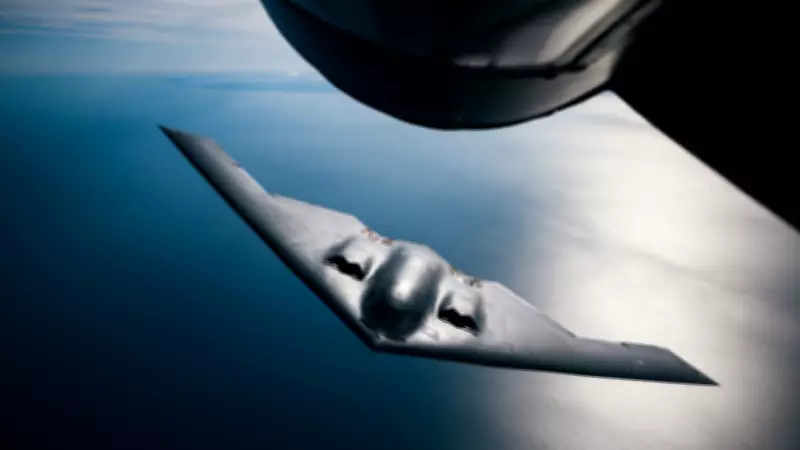
According to US Central Command (CENTCOM), the strikes utilized a comprehensive array of cutting-edge equipment. The US military detailed the deployment on social media, emphasizing the use of B-2 stealth bombers, LUCAS suicide drones, and artificial intelligence services from Anthropic. This marks one of the most technologically sophisticated military engagements in recent history.
The complete list of military apparatus employed by the US includes:

- B-2 stealth bombers
- LUCAS drones
- Patriot interceptor missile systems
- THAAD anti-ballistic missile systems
- F-18, F-16, F-22, and F-35 fighter jets
- A-10 attack jets
- EA-18G electronic attack aircraft
- Airborne early warning and control aircraft
- P-8 maritime patrol aircraft
- RC-135 reconnaissance aircraft
- MQ-9 Reaper drones
- M-142 HIMARS
- Nuclear-powered aircraft carriers
- Guided-missile destroyers
- Counter-drone systems
- Refuelling tanker aircraft and ships
- C-17 and C-130 cargo aircraft
- Artificial intelligence tools
Artificial Intelligence Plays Key Role in Warfare
In a groundbreaking development, the Pentagon integrated artificial intelligence services from Anthropic, including its Claude tools, during the attacks on Iran. A source familiar with the matter confirmed this usage, though specifics on how the AI was applied in the war effort remain unclear. Notably, just a day prior to the operation, the US declared Anthropic a supply chain risk, citing potential national security threats. President Donald Trump directed the government to cease collaboration with the startup, which had previously handled classified information through an arrangement with Amazon.
Stealth Bombers and Drones Lead the Assault
The Pentagon intensified its bombing campaign by deploying B-2 stealth bombers from the United States to strike hardened, underground Iranian missile facilities using 2,000-pound bombs. The B-2, a $2-billion flying-wing aircraft built by Northrop Grumman, features a 52-metre wingspan and stealth capabilities to evade radar, with a range of approximately 6,000 nautical miles without refuelling.
Additionally, the US military employed suicide drones identical to the LUCAS (Low-Cost Unmanned Combat Attack System) manufactured by SpektreWorks, costing about $35,000 each. CENTCOM also deployed one-way attack drones modelled on Iran's Shahed drones, highlighting a shift toward an "affordable mass" strategy in modern warfare, as seen in conflicts like Russia's invasion of Ukraine.
Tomahawk Missiles and Fighter Jets Enhance Strike Capabilities
The strikes included the use of Tomahawk Land Attack Missiles, long-range cruise missiles produced by Raytheon. These precision-guided weapons can hit targets up to 1,600 km away and cost an average of $1.3 million each. The US plans to purchase 57 Tomahawks in 2026, with upgrades to guidance systems and increased production targets.
Fighter jets played a crucial role, with CENTCOM releasing photos and video showing F/A-18 Hornet and F-35 Lightning II jets involved. The F-35, a fifth-generation stealth fighter, is capable of evading radar while carrying precision munitions, and is operated by both the US and Israeli Air Forces.

Regional Fallout and Broader Implications
The strikes have triggered significant regional responses, with Iranian state media claiming a US fighter jet was downed in Kuwait and reporting explosions in Bahrain, Dubai, and Doha. Israel also bombed Hezbollah targets in Beirut, while Gulf nations vowed to defend themselves. These developments underscore the high-stakes nature of the coordinated attacks and their potential to reshape geopolitical dynamics in the Middle East.
As the situation evolves, the integration of AI and advanced stealth technology in military operations sets a new precedent for future conflicts, emphasizing the growing role of innovation in national defense strategies.