

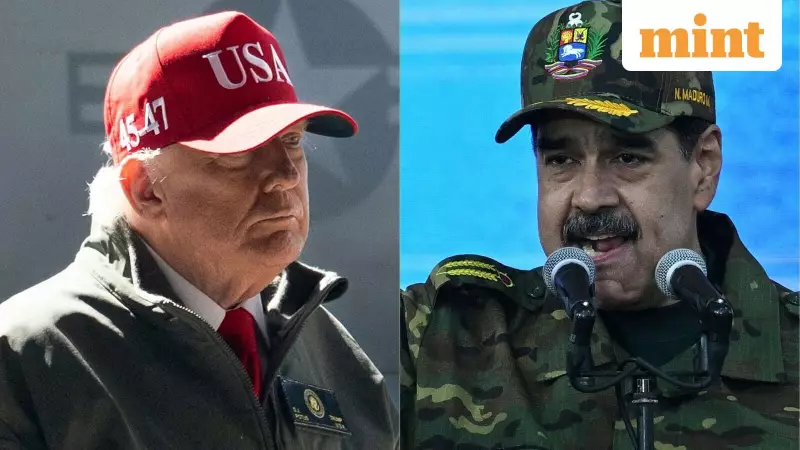
In a dramatic escalation of tensions, the United States has captured Venezuelan President Nicolás Maduro following a major military operation. US President Donald Trump announced the action, stating Maduro and his wife, First Lady Cilia Flores, are now in custody at the Metropolitan Detention Center in Brooklyn.
Charges and The Indictment Details
According to US authorities, the detention follows a sealed indictment unsealed on Saturday in the Southern District of New York. Maduro faces four serious charges: conspiracy to commit narco-terrorism, conspiracy to import cocaine, possession of machine guns and destructive devices, and conspiracy to possess such weapons.
The indictment alleges that Maduro, along with his wife, son, and three others, collaborated with violent drug cartels like the Sinaloa Cartel and the Tren de Aragua gang. It claims the Venezuelan government provided protection and logistical aid, facilitating the movement of up to 250 tons of cocaine annually through Venezuela by 2020. The drugs were allegedly moved using boats, ships, and aircraft from covert airstrips.

US Justification and Political Fallout
President Trump, who posted an image of a blindfolded Maduro, described the move as a coordinated military and law enforcement operation. At a press conference in Florida, he declared, "We will run the country" until a proper transition can be arranged. He indicated willingness to deploy US troops and involve American oil companies to rehabilitate Venezuela's crumbling oil infrastructure.
However, the operation has sparked immediate controversy. US Senator Bernie Sanders criticized the move on social media, stating, "President Trump does not have the constitutional authority to attack another country." Democrats have demanded clarity, claiming they were misinformed during briefings. The legality of capturing a foreign leader remains under intense scrutiny by legal experts.
Market Impact and Geopolitical Analysis
While explosions were reported in Caracas near military installations, market experts are assessing the broader implications. According to ANI reports, the immediate effect on global oil prices may be limited, as Venezuela's current output is about 1 million barrels per day, just 1% of global supply. Oil prices actually dipped on Saturday, with West Texas Crude falling to $57.32 per barrel.
Analysts like Sandeep Pandey of Basav Capital suggest the underlying motive is to protect the petrodollar system, which Venezuela challenged under former President Hugo Chávez. Trump's focus on reclaiming oil rights aligns with this view.
Looking ahead, Anuj Gupta of Ya Wealth predicts the attack will trigger regional geopolitical tension, potentially causing a gap-up opening for commodities like gold, silver, and crude oil when markets reopen. He expects Brent Crude to potentially reach $62-$65 per barrel.
The final impact hinges on Venezuela's political response and Washington's next steps. With the Maduro administration still in power and resistant to US engagement, the path forward remains highly uncertain.






