

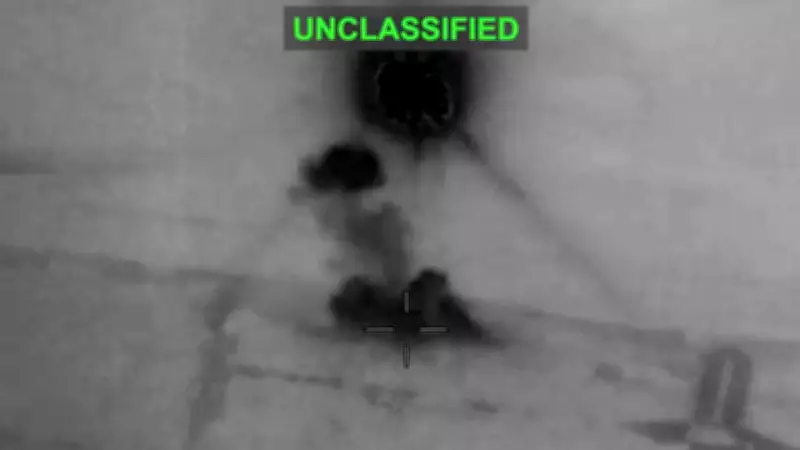
The United States military released a video on June 27, 2026, documenting its precision strikes against Iranian targets, a move that has escalated tensions between the two nations. The footage, published by the Pentagon, shows what it describes as successful hits on facilities linked to Iran's military infrastructure. However, Tehran swiftly countered the narrative, claiming the attack inflicted no meaningful damage and vowing to respond appropriately.
Details of the US Strikes
The video, shared across official US channels, depicts aerial bombardments targeting sites in Iran. According to a Pentagon statement, the strikes were carried out in retaliation for recent provocations by Iran, including attacks on US assets in the region. The footage highlights the use of advanced munitions, with officials stating that the operations were carefully planned to minimize collateral damage. “The strikes were precise and effective, neutralizing key threats to our forces and allies,” said a US defense official, speaking on condition of anonymity.
Iran’s Response and Denial of Damage
In stark contrast, Iranian authorities dismissed the US claims. Brigadier General Ahmad Reza Pourdastan, a senior Iranian military spokesperson, told state media that the attack “failed to achieve any of its objectives.” He asserted that Iran’s air defense systems intercepted most of the incoming projectiles, preventing significant harm. “The enemy’s aggression was met with our robust defenses, and the damage was negligible,” Pourdastan stated. He added that Iran would “not hesitate to defend its sovereignty” and hinted at potential retaliatory measures.

Regional and International Reactions
The incident has drawn widespread international attention. The United Nations called for restraint from both sides, urging dialogue to de-escalate the situation. Meanwhile, neighboring countries in the Gulf region have expressed concern over the potential for a broader conflict. Saudi Arabia and the United Arab Emirates issued statements calling for calm, while Russia condemned the US strikes as a violation of international law. China urged both parties to avoid actions that could destabilize the region further.
Impact on Global Oil Markets
The strikes have already affected global markets, with oil prices surging by more than 3% in early trading on June 28. Analysts warn that any prolonged confrontation could disrupt supply chains, particularly through the Strait of Hormuz, a critical chokepoint for oil shipments. The International Energy Agency stated it is monitoring the situation closely and stands ready to coordinate a response if needed.
Historical Context and Escalation Risks
This latest exchange marks a significant escalation in US-Iran tensions, which have fluctuated for decades. The 2015 nuclear deal, from which the US withdrew in 2018, had temporarily eased hostilities, but subsequent incidents—including drone shootdowns and attacks on oil tankers—have kept relations fraught. Experts warn that miscalculations could lead to a full-scale conflict, drawing in regional proxies and global powers. “We are in a dangerous phase where each side is testing the other’s red lines,” said Dr. Farideh Farhi, a political analyst at the University of Hawaii. “The video release is as much about domestic audiences as it is about signaling resolve.”
Next Steps and Diplomatic Channels
Diplomatic efforts are underway, with the European Union offering to mediate between Washington and Tehran. However, both sides have so far shown little willingness to back down. The US National Security Council indicated that further strikes could follow if Iran does not cease its “hostile activities.” Iran’s Foreign Ministry, meanwhile, announced plans to file a complaint with the United Nations Security Council, accusing the US of an act of aggression. As the world watches, the risk of a wider war in the Middle East looms larger than it has in years.






