

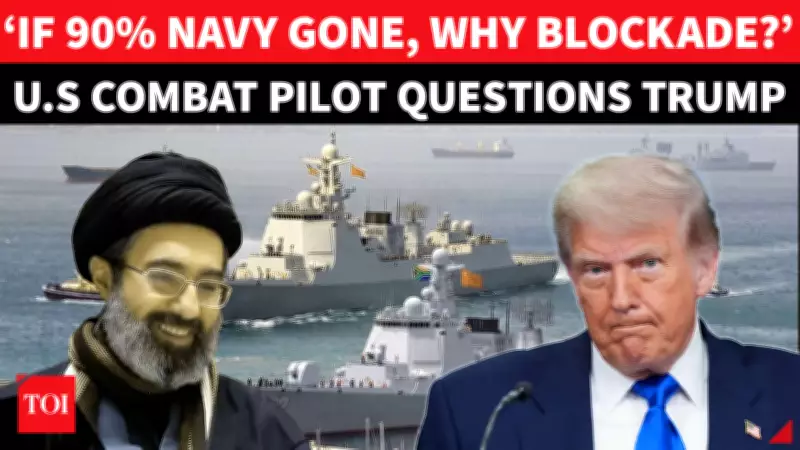
A growing debate is emerging over the accuracy of US wartime claims about Iran's military losses, as analysts question whether the numbers match the reality on the ground. Despite assertions that a majority of Iran's naval and air capabilities have been destroyed, continued US military deployments and blockade measures suggest otherwise. Experts warn that Iran still retains significant missile stockpiles and an active drone program, capable of overwhelming defenses through sheer volume and low-cost asymmetric tactics. The situation highlights a critical gap between official narratives and battlefield risks, raising concerns about escalation if the fragile ceasefire collapses.
Veteran Challenges Official Narrative
A U.S. Army veteran has publicly exposed what he calls 'lies' from the Trump administration regarding Iran's military strength. He points out that if Iran were truly weak, there would be no need to deploy warships in the Gulf or maintain a blockade. The veteran's comments have sparked a wider debate among military analysts and policymakers.
Iran's Remaining Capabilities
According to defense experts, Iran still possesses thousands of ballistic and cruise missiles, as well as a sophisticated drone program featuring the Shahed-136 and other models. These low-cost systems can be used in saturation attacks to overwhelm US and allied defenses. The Islamic Revolutionary Guard Corps Navy also maintains a fleet of fast attack craft and anti-ship missiles that pose a threat to commercial shipping and naval vessels.

Ceasefire Fragility
The current ceasefire between the US and Iran remains fragile, with both sides accusing each other of violations. Any collapse could lead to a broader conflict, drawing in regional proxies and potentially disrupting global oil supplies through the Strait of Hormuz. Analysts warn that miscalculations or misunderstandings could trigger an escalation that neither side fully controls.
Implications for US Policy
The discrepancy between official claims and on-the-ground realities has implications for US credibility and strategic planning. If the administration's assessments are inaccurate, it could undermine trust in military leadership and complicate future diplomatic efforts. The debate also highlights the challenges of asymmetric warfare, where a smaller, less technologically advanced adversary can still inflict significant damage.






