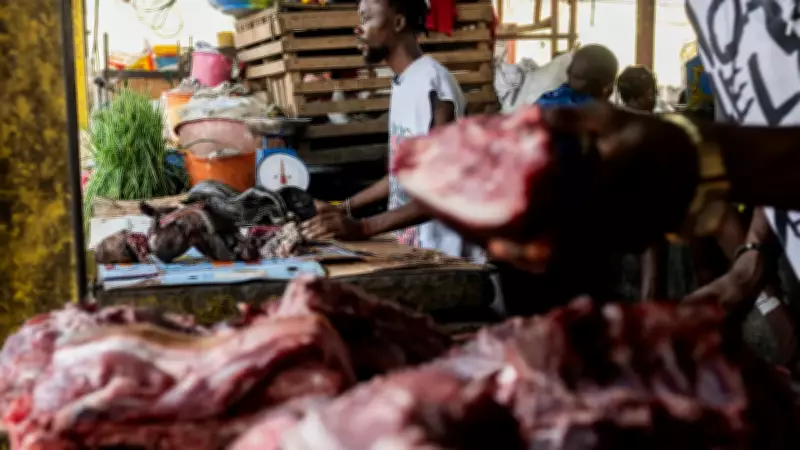
In the bustling Masina Market of Kinshasa, vendors of wild meat often keep their goods hidden from plain sight. Customers must explicitly request items like giant swamp rodents or antelope parts. Some sellers, such as women presiding over large baskets of squirming caterpillars, display their wares openly. For many in Congo and across Central and West Africa, wild meat is not just food but a cultural staple. Even the current Ebola outbreak, which is devastating parts of eastern Congo, has failed to curb the demand for bushmeat from the Congo Basin, a vast forested region often referred to as Earth's second lung.
The Link Between Wild Meat and Ebola
The Congo Basin is home to diverse wildlife, including great apes and snakes, both hunted for meat. This practice exposes locals to zoonotic diseases like Ebola. Although Ebola is not typically foodborne, the US Centers for Disease Control and Prevention notes that cases in Africa have been linked to hunting and butchering infected animals. Dr. Tolbert Geewleh Nyenswah of the Africa Centres for Disease Control and Prevention emphasizes that frequent outbreaks occur due to the human-animal-environment interface, highlighting the need for a one-health approach.
The Congolese government has reported over 1,000 suspected Ebola cases and at least 220 deaths since the outbreak was declared on May 15. The virus likely spread undetected for weeks, and the World Health Organization believes the true scale is larger. Ebola, named after a Congo River tributary, was first identified in 1976. Outbreaks are thought to begin when the virus jumps from infected animals like fruit bats to humans, often through handling or eating wild meat.

However, since Ebola outbreaks are sporadic, some communities remain skeptical of the link. Dr. Misaki Wayengera, a microbiologist advising Uganda's Ministry of Health, notes that changing core practices is difficult. The consequences of Ebola are severe, with symptoms that can terrorize villages and lead to beliefs in evil spells. The deadliest outbreak, in West Africa from 2014 to 2016, infected about 28,000 people and killed over 11,300.
Education and Cultural Challenges
While Congo has banned hunting endangered wildlife like great apes, there is no blanket ban on wildlife trade. Illegal hunting persists for species like bonobos. For many in the Congo Basin, wild meat is the primary protein source. The Center for International Forestry Research estimates annual extraction at 4.5 million tons. Known as viande de brousse, it is even served in trendy restaurants, intensifying pressure on the Congo Basin's resources. Despite biodiversity losses, the basin remains the world's largest carbon sink.
Public health campaigners must enhance education about Ebola transmission, says Gladys Kalema-Zikusoka, founder of Conservation Through Public Health. People need to avoid meat from unknown or dead animals. Fruit bats, natural hosts of Ebola viruses, are considered delicacies in many regions, as are various monkeys. At Kinshasa's Masina Market, traders reported selling antelope, rodent, and snake meat but stopped selling monkey meat. Vendor Guyva Mputu sold python, while Charles Ntanga offered giant rodent carcass at $17 per kilogram. Ntanga stated, 'We sell wild meat. We make our lives through this business.'