

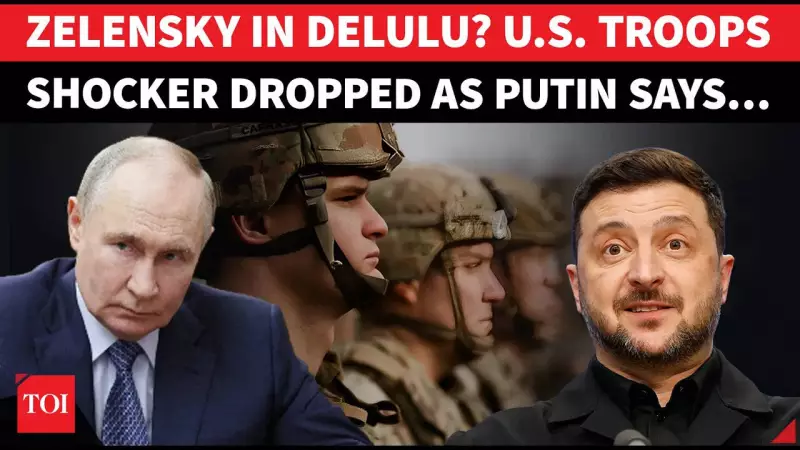
In a statement that has sent shockwaves through international diplomatic circles, Ukrainian President Volodymyr Zelensky has made a controversial claim regarding potential American military deployment. He stated that discussions have taken place with former and potentially future U.S. President Donald Trump about sending American troops to Ukraine. This assertion, made around January 1, 2026, directly contradicts years of consistent denials from Washington regarding any such plans.
Zelensky's Bombshell and the Immediate Fallout
The claim by President Zelensky represents a significant shift in the public narrative surrounding Western military support for Kyiv. For years, the United States and its NATO allies have provided substantial weaponry, intelligence, and training to Ukrainian forces but have steadfastly avoided the stationing of their own combat troops on Ukrainian soil. This line was considered a major red line to avoid direct confrontation with nuclear-armed Russia.
Zelensky's revelation, therefore, is not just a statement but a potential geopolitical gambit. It comes at a time when Kyiv is actively pushing for stronger, more concrete security guarantees from its Western partners. By suggesting that talks with a figure like Donald Trump have occurred, Zelensky may be attempting to alter the boundaries of the debate and test the limits of possible future support.

Moscow's Furious Response and Stark Warnings
The reaction from Moscow was swift and severe. Russian officials immediately condemned the claim, issuing stark warnings that any deployment of foreign troops to Ukraine would cross a critical red line. The Kremlin's position is clear: such forces would be considered legitimate military targets.
This hardening of rhetoric amplifies the already extreme tensions in the region. The Russian statement transforms the hypothetical scenario of Western troops in Ukraine into a potential trigger for a dramatic and dangerous escalation of the conflict, possibly drawing NATO and Russia into direct confrontation.
A Tense Silence from Washington
Adding to the global unease is the notable silence from Washington. As of the report, there has been no immediate official confirmation or denial from the U.S. government regarding Zelensky's claim of discussions with Trump. This lack of clarification fuels uncertainty and speculation.
Analysts suggest this silence could stem from the sensitive nature of transitional or hypothetical discussions, especially with a former president who is also a current candidate. However, in the vacuum of an official U.S. statement, Zelensky's claim and Russia's threat gain more weight, putting allied capitals on edge and raising diplomatic stakes worldwide.
Broader Implications and Mounting Regional Tension
The controversy erupts against a backdrop of continued violence. The report references a major overnight drone strike on Odesa attributed to Russian forces, which injured six people, including children. Furthermore, other global flashpoints remain active, with news of a first U.S. strike inside Venezuela and escalating rhetoric between Iran and the U.S.
Meanwhile, signs of weariness in some Western support for Ukraine are hinted at, with mention of a NATO nation, annoyed by demands, asking Ukraine to compromise for potential peace. Zelensky's dramatic claim about U.S. troops may be a calculated effort to reinvigorate commitment and secure long-term guarantees, but it risks provoking the very escalation it seeks to deter.
The coming days will be crucial. The international community will be watching for an official U.S. response to clarify the record. The situation underscores the fragile and volatile state of global security, where a single statement can heighten risks and redefine the boundaries of a protracted and devastating war.






