

In a stark warning that underscores the fragile state of international diplomacy, Ukrainian President Volodymyr Zelenskyy has expressed a grave concern: the United States might eventually "step back" and lose its focus on facilitating peace talks to end the devastating war with Russia. This apprehension comes at a critical juncture, as global attention fragments and the conflict grinds on.
Zelenskyy's Dire Warning on Waning American Focus
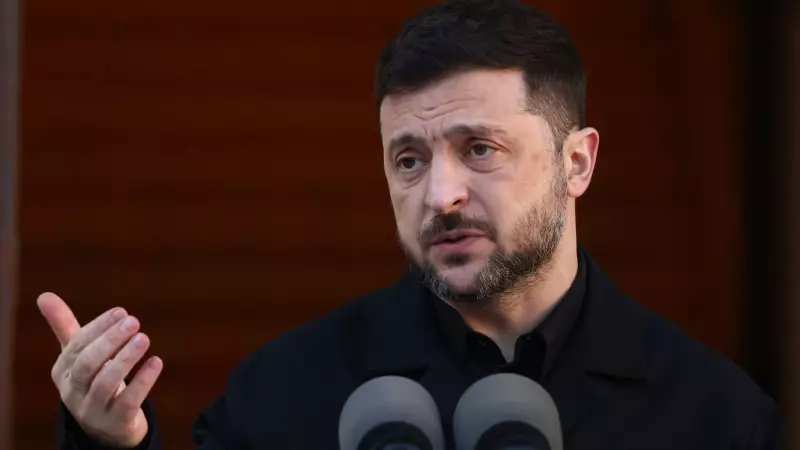
President Zelenskyy voiced his fears during a press conference in Kyiv on Sunday, May 26. He articulated a scenario where American interest could wane, leading to a disengagement from crucial peace efforts. The Ukrainian leader stressed that the US role as a unifying force among allied nations is indispensable. Without consistent and determined American leadership, he argued, a collective and effective diplomatic push against Russian aggression becomes significantly harder to sustain.
"It is very important that the United States does not step back," Zelenskyy stated, highlighting the delicate balance of international support. His comments reflect deep anxiety about the sustainability of global solidarity, especially with upcoming elections in key partner nations and competing global crises vying for attention.

The Context: Stalled Diplomacy and Military Realities
This warning is not made in a vacuum. It follows the recent international peace summit held in Bürgenstock, Switzerland, on June 15-16. While Zelenskyy praised the summit's outcome as a diplomatic success, the event notably lacked participation from major global powers aligned with Russia, such as China. Furthermore, Russia itself dismissed the summit as "futile" even before it began, refusing to engage in what it termed an ultimatum-based process.
The Ukrainian President's strategy has consistently been to build a broad, global coalition to isolate Russia and force it to the negotiating table from a position of weakness. However, the absence of critical nations and Moscow's outright rejection of the Swiss initiative illustrate the monumental challenges facing this peace formula. Zelenskyy's call for the US to remain deeply involved is a direct response to these diplomatic headwinds.
Implications of a US "Step Back" for Ukraine and the World
The potential consequences of diminished American engagement are severe, according to Zelenskyy's assessment. A loss of US leadership could lead to a fragmented international response, where allied nations pursue disjointed strategies, thereby weakening the collective pressure on the Kremlin. This could embolden Russia and prolong the conflict indefinitely.
Zelenskyy's appeal is, therefore, a proactive measure to shore up support. He is effectively urging the US and its allies to view sustained involvement in Ukraine not as a temporary burden but as a long-term investment in global security and the rules-based international order. The underlying message is clear: peace in Ukraine requires unwavering, patient, and unified diplomatic effort, with America at the helm.
As the war enters another phase, the battle is not only on the frontlines but also in the corridors of global power. Zelenskyy's latest remarks serve as a crucial reminder that diplomatic stamina is as vital as military aid. The world's ability to maintain focus on Ukraine's plight will ultimately determine the trajectory of this conflict and the prospects for a just and lasting peace.






