

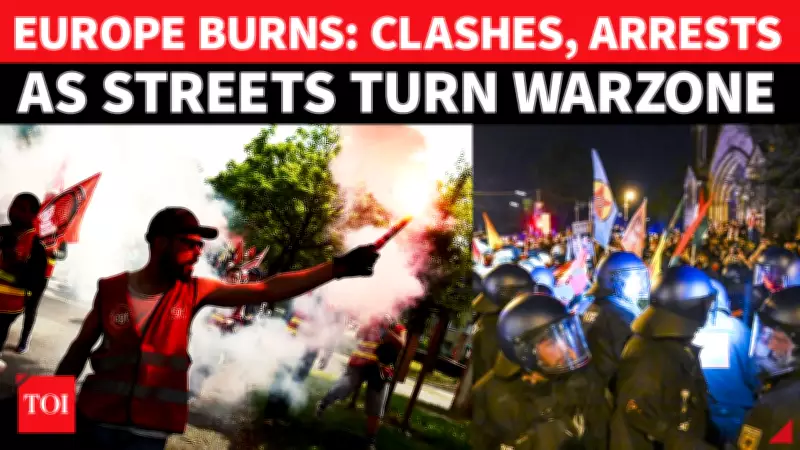
Europe's streets have become a battlefield this May Day, as International Workers' Day erupted into massive anti-government uprisings across the continent. From Paris to Berlin, thousands of protesters clashed with riot police, set fires, and burned effigies of French President Emmanuel Macron, fueling fears of a continent reaching its breaking point.
Violent Clashes in Major Capitals
In Paris, demonstrators set fire to barricades and threw projectiles at security forces, who responded with tear gas and water cannons. The French capital saw some of the worst violence in years, with dozens of arrests reported. In Berlin, protesters battled police near the Brandenburg Gate, while in Brussels, trade unions led marches that turned chaotic as far-left groups joined the fray.
Economic Grievances Fuel Anger
The protests are driven by a toxic mix of high energy prices and growing anger over the U.S.-led blockade in the Gulf region. Labor unions are demanding significant wage hikes to counter runaway inflation, which has eroded purchasing power across the eurozone. Many protesters also expressed solidarity with workers in the Gulf, condemning the blockade as an act of aggression.

Political Backlash and Arrests
Authorities have made hundreds of arrests across Europe, with police in Madrid, Rome, and London also reporting clashes. In Germany, the interior minister condemned the violence, stating that peaceful protest is a right but destruction will not be tolerated. Meanwhile, opposition leaders have accused governments of ignoring the plight of ordinary citizens.
A Continent at a Crossroads
The 2026 May Day protests highlight a continent grappling with economic instability and geopolitical tensions. As energy prices continue to soar and the Gulf blockade disrupts trade, analysts warn that the unrest could escalate further. With no immediate solutions in sight, Europe appears to be spiraling into chaos, leaving governments struggling to maintain order while addressing the root causes of public anger.






