

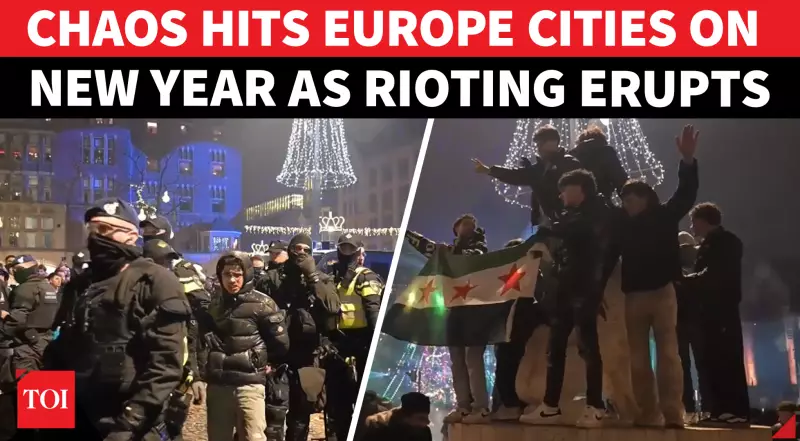
The dawn of the year 2026 was met not with peaceful celebration but with widespread violence and chaos across several major European nations. What traditionally is a night of festivity spiralled into dangerous unrest, leading to significant police deployments, injuries, and tragic fatalities.
Germany Grapples With Tragedy and Turmoil
In Germany, the situation turned particularly grave. Authorities in Berlin enforced strict bans on fireworks at key locations like Alexanderplatz and Neukölln. Despite these measures, police had to detain multiple individuals as celebrations turned disorderly. The night was marked by injuries and required a heavy police presence to attempt to control the crowds.
In a heartbreaking incident, two teenagers lost their lives after a homemade firework device exploded. This tragedy underscored the extreme dangers that accompanied the night's lawlessness.

Amsterdam and France Face Fiery Clashes
Across the border in the Netherlands, similar scenes of violence unfolded. In the heart of Amsterdam, rioters clashed with police at the iconic Dam Square. The city's skyline was lit not by celebratory displays but by flares and deliberately set fires, creating a scene of havoc.
The scale of the disturbances was so vast that emergency phone lines were overwhelmed, leaving authorities struggling to respond to all incidents and restore a semblance of order. Reports also indicated significant unrest in parts of France, painting a picture of a continent-wide wave of New Year's violence.
Aftermath and a Continent on Edge
The consequences of the night are severe. Beyond the immediate physical damage and the tragic loss of young lives, the events raise serious questions about public safety during mass celebrations. The overwhelming of emergency services points to a coordinated or exceptionally widespread level of unrest that security plans failed to contain.
European cities are now left to assess the damage and investigate the root causes of this sudden explosion of violence on a night meant for unity and hope. The incidents of January 1, 2026, will likely prompt urgent reviews of policing and crowd-control strategies for future public holidays.

