

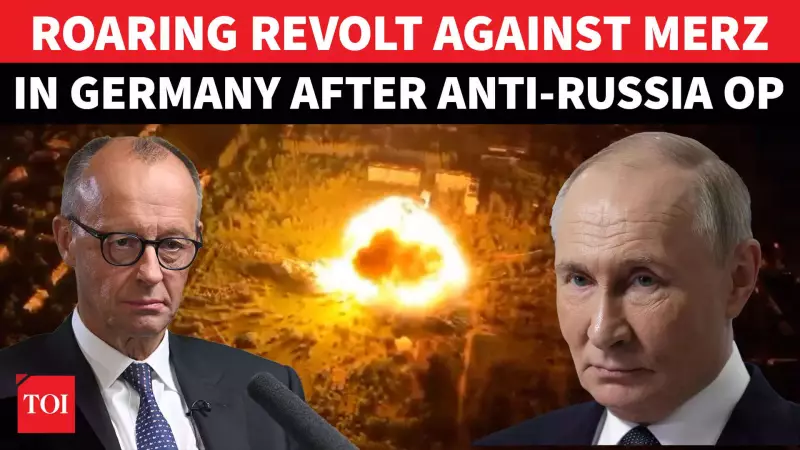
German Chancellor Friedrich Merz is encountering significant political resistance both at home and across the European Union for his proposal to confiscate frozen Russian state assets to finance Ukraine's war effort. The controversial move, intended to support Kyiv, is instead deepening rifts within Europe and drawing sharp criticism from allies and opponents alike.
Domestic Fury and International Condemnation
Within Germany's parliament, the Bundestag, critics have issued strong warnings. They argue that the plan to seize Russian assets is dangerously provocative and could lead to a severe escalation of the conflict. More critically, they contend it undermines Germany's own national interests and financial stability. Leading the charge is Alternative for Germany (AfD) leader Tino Chrupalla, who launched a scathing attack on Chancellor Merz. Chrupalla accused Merz of finding it easy to spend other people's money rather than Germany's own, framing the proposal as fiscally irresponsible and risky.
The opposition is not confined to German borders. Key European leaders have outright rejected the proposal. Slovakia's Prime Minister Robert Fico and Hungary's Prime Minister Viktor Orban have been particularly vocal. Both leaders have accused the EU leadership, including Merz, of actively fuelling the war in Ukraine through such measures instead of seeking a diplomatic path.

A Massive Loan and a Fracturing Union
At the heart of the debate is a colossal financial package being prepared by the European Union. The EU is set to debate a controversial loan for Kyiv worth one hundred and forty billion dollars, which would be backed by the value of the frozen Russian assets. This mechanism aims to provide Ukraine with immediate funds, using the seized assets as collateral for the loan.
However, this ambitious plan is exposing the fragile unity within Europe regarding continued support for Ukraine. The strong objections from member states like Hungary and Slovakia, combined with the internal dissent in Germany, indicate that consensus is breaking down. The once-solid front presented by Europe is now under severe strain, complicating the bloc's strategic response to the ongoing war.
Implications for European Policy
The growing division presents a major challenge for Chancellor Merz and pro-Ukraine factions within the EU. The debate over the asset seizure and the massive loan is no longer just about supporting Ukraine; it has become a litmus test for European solidarity and strategic autonomy. With influential figures like Orban labelling such actions a "declaration of war," the political cost of the move is skyrocketing.
As the EU prepares for this critical debate, the outcome is uncertain. The opposition highlights a significant bloc within Europe that is increasingly wary of the economic and geopolitical risks of prolonged confrontation. The episode underscores a pivotal moment where Europe's unified stance on Ukraine funding is being critically tested, with potential long-term consequences for the bloc's foreign policy cohesion.

