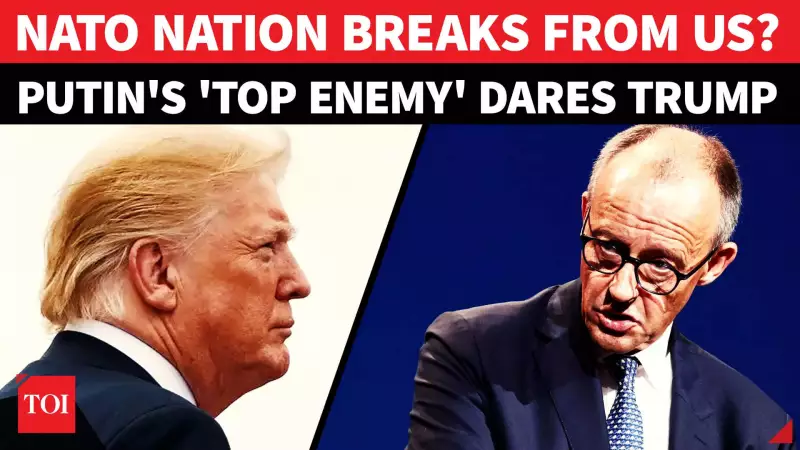
In a powerful address that signals a significant shift in European foreign policy, German Chancellor Friedrich Merz has delivered one of his most forceful warnings to date about Germany's future direction. Speaking at a CDU party rally in Magdeburg, Merz outlined a three-pronged strategy that includes stricter migration controls, reduced dependency on the United States, and substantial military strengthening.
Europe's Migration Crisis: A Firm Stance
The German leader made his position on migration unequivocally clear, declaring that Germany cannot serve as the final destination for the world's refugees. Merz urged European nations to stop what he described as "waving them through" and called for a coordinated approach to manage the ongoing migration challenge. His comments come amid growing political pressure and public debate about immigration policies across European Union member states.
Direct Challenge to Trump's America First Policy
In perhaps his most striking remarks, Chancellor Merz took direct aim at US President Donald Trump and his renewed push for trade tariffs. Merz explicitly warned that Europe must prepare for an America that prioritizes its own economic interests first, even at Europe's expense. This represents one of the strongest criticisms yet from a German leader regarding Trump's economic policies and their potential impact on transatlantic relations.

The Chancellor's comments reflect growing European concerns about the return of protectionist trade policies from the United States. Merz's warning suggests that Germany and Europe are preparing for potential trade conflicts and economic challenges as the Trump administration implements its "America First" agenda.
Military Strengthening and European Sovereignty
Complementing his economic warnings, Merz emphasized the need for dramatic strengthening of German military capabilities. This call for enhanced defense spending and capability development aligns with broader European efforts to increase strategic autonomy and reduce military dependence on the United States.
The speech, delivered on November 30, 2025, marks a significant moment in European-American relations, coming amid other global tensions including conflicts in Ukraine, potential US military action in Venezuela, and ongoing trade discussions. Merz's strong language indicates that Germany is preparing to assert its economic and political independence more forcefully in the coming years.
Political analysts suggest that Merz's remarks represent a fundamental reassessment of Germany's role in international affairs and its relationship with the United States. The Chancellor's warning about not becoming a "vassal" to American interests underscores the shifting dynamics in transatlantic partnership as Europe confronts multiple global challenges.