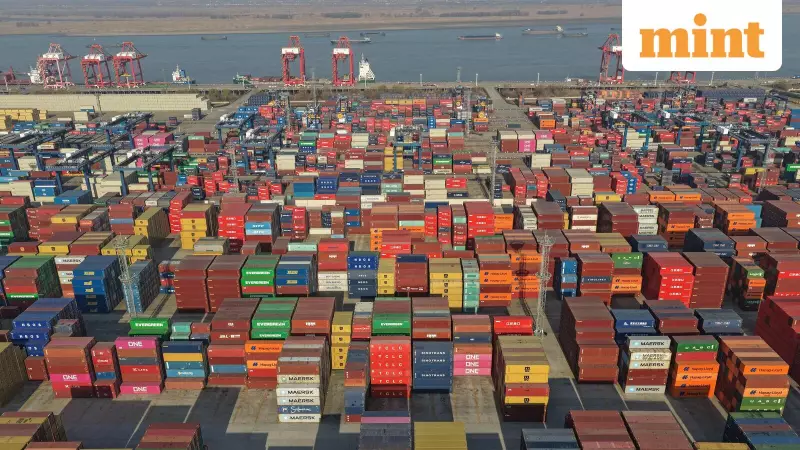
China's Trade Surplus Reaches Historic High in 2025
China's trade surplus soared to an unprecedented level in 2025. Government data released on Wednesday shows the surplus hit almost $1.2 trillion. This remarkable figure sets a new record for the world's second-largest economy.
Export and Import Figures Tell the Story
Customs data reveals China's exports increased by 5.5% throughout last year. The total export value reached $3.77 trillion. Meanwhile, imports remained essentially flat at $2.58 trillion. This combination created the massive surplus.
The previous year's trade surplus was already substantial at over $992 billion. The 2025 numbers represent a significant jump from that baseline.

December Performance Exceeds Expectations
December brought particularly strong export numbers. Exports climbed 6.6% compared to the same month in the previous year. This performance exceeded economists' predictions. It also surpassed November's year-on-year increase of 5.9%.
Imports showed even more dramatic improvement in December. They rose 5.7% year-on-year. This contrasts sharply with November's modest 1.9% increase.
Surpassing the Trillion Dollar Mark
China's trade surplus first crossed the $1 trillion threshold in November 2025. During the first eleven months of last year, the surplus reached $1.08 trillion. This milestone highlights the sustained strength of China's export machine.
Geographic Shifts in Export Destinations
China's export landscape underwent significant changes in 2025. Exports to the United States dropped sharply throughout most of the year. The decline reached 20% for the entire year.
This decrease coincided with President Donald Trump's return to office. His administration escalated trade tensions with China, creating challenging conditions for bilateral trade.
New Markets Compensate for US Decline
Other regions stepped in to absorb China's exports. Shipments to Africa surged by an impressive 26%. Southeast Asian countries increased their imports from China by 13%.
The European Union purchased 8% more Chinese goods. Latin American markets showed a 7% increase. These gains effectively offset the losses in the American market.
Economic Drivers and Global Concerns
Several product categories supported China's export growth. Global demand for computer chips remained strong. Other electronic devices and their manufacturing materials also saw healthy demand.
Automobile exports contributed to the positive numbers as well. Car shipments grew throughout last year.
Growth Meets International Anxiety
China's strong exports have helped maintain economic growth close to the official target of about 5%. However, this success has raised concerns internationally.
Some countries worry about flooding their markets with inexpensive Chinese imports. They fear these imports could damage local industries and disrupt domestic manufacturing.
Expert Perspectives on Future Trade
Economists generally expect exports to continue supporting China's economy this year. Jacqueline Rong, chief China economist at BNP Paribas, expressed this view clearly.
"We continue to expect exports to act as a big growth driver in 2026," Rong stated. She acknowledged ongoing trade friction and geopolitical tensions but remained optimistic about export performance.
Government Acknowledges Challenges
Wang Jun, vice minister of China's customs administration, addressed reporters in Beijing. He described the external trade environment for 2026 as "severe and complex."
Despite these challenges, Wang expressed confidence in China's trade fundamentals. He emphasized that they remain solid despite external pressures.
Domestic Economic Challenges Persist
While exports thrive, China faces significant domestic headwinds. The International Monetary Fund recently called for China to address economic imbalances. The IMF specifically urged faster transition from export reliance to domestic demand.
Property Sector Continues to Struggle
A prolonged property downturn continues to affect consumer confidence. Authorities cracked down on excessive borrowing, triggering developer defaults. This situation still weighs heavily on domestic demand.

Chinese leaders have prioritized increasing consumer and business spending. Their policy focus aims to boost domestic economic activity.
Limited Impact from Recent Measures
Government initiatives have shown limited success so far. Trade-in subsidies encouraged consumers to purchase newer, energy-efficient products. These included home appliances and vehicles.
However, economists question the effectiveness of these measures. Rong from BNP Paribas offered a cautious assessment.
"We expect domestic demand growth to stay tepid," she said. "In fact, the policy boost to domestic demand looks weaker than last year -- in particular the fiscal subsidy program for consumer goods."
Forecasts for 2026 Trade Performance
Gary Ng, a senior economist at French investment bank Natixis, provided specific predictions. He forecasts China's exports will grow about 3% in 2026. This represents a slowdown from the 5.5% growth achieved in 2025.
With import growth expected to remain slow, Ng anticipates China's trade surplus will stay above $1 trillion this year. The massive surplus appears likely to continue despite changing global dynamics.
China's trade story for 2025 reveals both remarkable success and ongoing challenges. Record surpluses demonstrate export resilience even as domestic consumption struggles to gain momentum. The coming year will test whether this export-driven model can sustain China's economic ambitions.