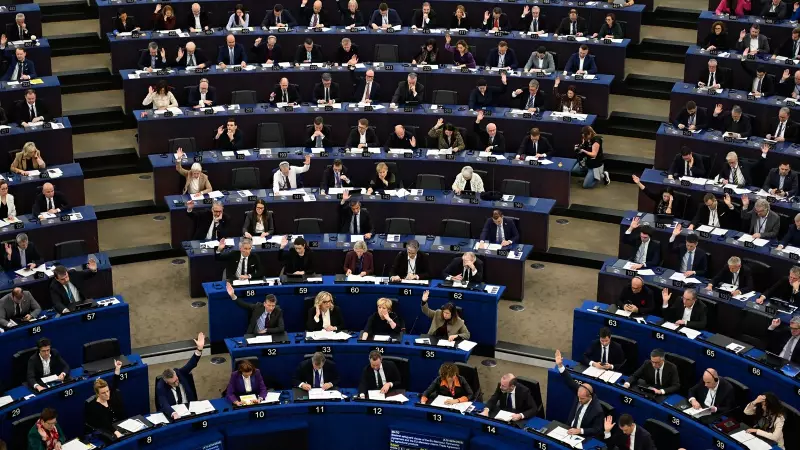
In a decisive move to cut energy ties with Moscow, the European Parliament has given its formal approval to a strategy that mandates a complete phase-out of Russian gas imports. The vote, held on Thursday, solidifies a political commitment to end the bloc's reliance on Russian fossil fuels by the year 2027.
A Formal End to Reliance on Russian Energy
The resolution, which was adopted with a strong majority, builds upon the REPowerEU plan launched in the wake of Russia's full-scale invasion of Ukraine in 2022. While the EU has already made significant strides in reducing its imports, this vote transforms a political ambition into a concrete parliamentary mandate. The text explicitly calls for an "accelerated and full phase-out of EU imports of Russian fossil fuels, including gas, by 2027."
This legislative action underscores the EU's long-term strategic shift away from Russian energy. Prior to the war, Russia supplied about 40% of the EU's natural gas needs. The drastic reduction since then has been hailed as a major geopolitical and economic achievement, though it has also contributed to higher energy prices within the bloc.

Diversification and the Path to Energy Security
The approved text is not just about ending imports; it lays out a comprehensive roadmap for securing the Union's energy future. A central pillar of this strategy is massive investment in renewable energy sources like wind, solar, and green hydrogen. The Parliament emphasized the need to accelerate permitting procedures for clean energy projects to meet these ambitious goals.
Furthermore, the resolution highlights the importance of diversifying supply sources. The EU has increasingly turned to liquefied natural gas (LNG) from suppliers like the United States, Qatar, and various African nations. It also calls for enhanced energy efficiency measures across member states and the development of better interconnections between national gas and electricity grids to prevent shortages.
MEPs stressed that this transition must be just and equitable, ensuring that vulnerable households and industries are protected from severe economic hardship during the shift.
Strategic Autonomy and Support for Ukraine
The vote is deeply intertwined with the EU's support for Ukraine. By cutting off a major source of revenue for the Kremlin's war machine, the bloc aims to apply sustained economic pressure on Russia. The resolution explicitly links the phase-out to the ongoing conflict, stating it is a direct response to Russia's aggression.
This move is also framed as a critical step toward achieving "strategic autonomy" for the European Union. Reducing dependency on a single, adversarial supplier is seen as fundamental to the EU's security and its ability to conduct an independent foreign policy. The Parliament's action sends a strong signal of unity and long-term commitment, both to its own citizens and to the international community.
While the vote is a powerful political statement, the actual implementation will depend on continued coordination among the 27 member states and the European Commission. Challenges remain, including managing energy storage for winter seasons and ensuring stable supplies during the transition period. However, the 2027 deadline sets a clear and binding timeline for the historic decoupling of European energy from Russian gas.