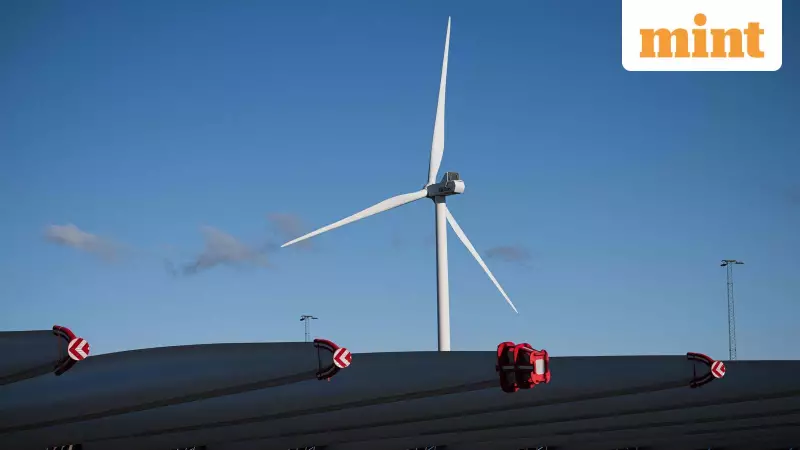
Europe's ambitious and aggressive push to transition away from fossil fuels towards green energy has delivered a significant reduction in carbon emissions but at a steep and unexpected economic cost. The continent's strategy, once pitched as a win-win for jobs and the environment, has resulted in dramatically higher electricity prices, hobbling heavy industry and straining political unity across the region.
The High Price of Green Ambition
While Europe has succeeded in cutting carbon emissions by 30% from 2005 levels—far more than the 17% drop seen in the United States—this environmental victory has come with severe economic consequences. According to International Energy Agency data, Germany now suffers the highest domestic electricity prices in the developed world, while the United Kingdom faces the highest industrial electricity rates among 28 major economies. Italy follows closely behind.
The disparity is stark when compared to global competitors. Average electricity prices for heavy industries within the European Union remain roughly twice as high as those in the U.S. and 50% above China's. This cost burden is driving away energy-intensive businesses and crippling Europe's ability to attract future-focused industries like artificial intelligence, which rely on cheap and abundant power.

The economic damage is tangible. British chemical giant Ineos announced the closure of two plants in western Germany in October due to high energy costs. ExxonMobil recently threatened to exit Europe's chemicals sector entirely, citing uncompetitive green policies, and plans to shut a chemical plant in Scotland. Professor Dieter Helm of Oxford University starkly summarised the situation: "We are hemorrhaging industry."
Political Consensus Cracks Under Cost-of-Living Shock
The soaring energy costs are not just an industrial problem; they are a profound political one. The cost-of-living shock for consumers, partly fueled by high power bills, is eroding public support for the green transition and boosting anti-establishment parties. These parties successfully frame the shift as an elite project that harms ordinary workers and consumers.
Even with broad public concern about climate change, right-wing populist parties in France, Germany, and the UK, which oppose renewable energy targets and subsidies, are gaining significant ground. The political fractures are visible: Norway's coalition government collapsed after a revolt over adopting proposed EU renewable energy rules, and diplomatic spats over energy policy are erupting between European nations.
For citizens like Dina Ingram, a 62-year-old office administrator in London, the impact is personal and painful. Facing wholesale electricity costs 80% higher than in the U.S., she can now only afford to run her central heating for three hours a day in winter and does not heat her bedroom at all. "I get angry," she said, attributing the prices to corporate greed.
Systemic Flaws and a Trillion-Euro Challenge
Analysts point to fundamental flaws in Europe's "or" strategy. Unlike the U.S., China, and India, which pursue an "and" strategy of building renewables alongside fossil fuel capacity, Europe raced to replace fossil fuels by taxing carbon, subsidising renewables, and shutting down conventional power plants. This left the continent with reduced reliable energy capacity before the new renewable system was fully operational.
The hidden costs of renewables are now becoming apparent. While sun and wind are free, harnessing them requires massive investment in infrastructure, battery storage for intermittent supply, and vast redundant capacity. In the UK, these "non-commodity" costs—grid upgrades, subsidies, and levies—now make up nearly half of a consumer's electricity bill and have risen faster than wholesale gas costs.
Some projects highlight the inefficiency. The Seagreen offshore wind farm in Scotland, a symbol of Britain's green push, was disconnected over 70% of the time in 2023 because the ageing grid could not handle its power pulses. UK consumers paid £2.7 billion last year to "balance" the grid, a cost projected to hit £8 billion by 2030.

Looking ahead, the financial challenge is monumental. Goldman Sachs Research estimates Europe will need to invest up to €3 trillion ($3.48 trillion) in power generation and infrastructure over the next decade—double the spending of the past ten years. This comes as governments face tighter budgets from aging populations, higher defense spending, and soaring debt interest.
The promise of ultimately cheaper energy remains distant. Aurora Energy Research estimates a clean power system in the UK would only start saving consumers money from 2044, a similar timeline for Germany. By then, the cumulative economic damage could be severe. As Swedish Deputy Prime Minister Ebba Busch warned, "Without energy we have no industry, and without industry we have no defense." Europe's painful experience offers crucial lessons for other nations, including India, navigating their own complex energy transitions.