Europe's ambitious and contentious strategy to finance Ukraine's war effort by tapping into frozen Russian sovereign assets has ignited a fierce global debate, pitting urgent military needs against the bedrock principles of the international financial order. The plan, which has been under discussion for months, is now facing significant legal and economic headwinds, with key financial institutions and the Kremlin itself issuing stark warnings about the potential fallout.
Euroclear at the Eye of the Storm: A $47 Trillion Dilemma
Central to this escalating dispute is Euroclear, the Belgian financial clearing house that acts as a crucial custodian for a vast portion of the world's securities. The institution is sitting on an astronomical sum of over $47 trillion in assets, including a significant portion of the Russian state assets frozen by Western sanctions following the invasion of Ukraine. Euroclear has emerged as a vocal opponent of the plan to outright seize and repurpose these funds.
The clearing house argues that such a move would expose it to immense legal and bankruptcy risks. Its primary concern is that altering the status of these frozen assets—turning them from a blocked reserve into confiscated capital—would breach fundamental principles of sovereign immunity and set a dangerous precedent. Financial experts fear this could erode trust in Western financial systems, making other nations wary of holding reserves in euros or dollars.

Kremlin's Warning and Mounting Legal Battles
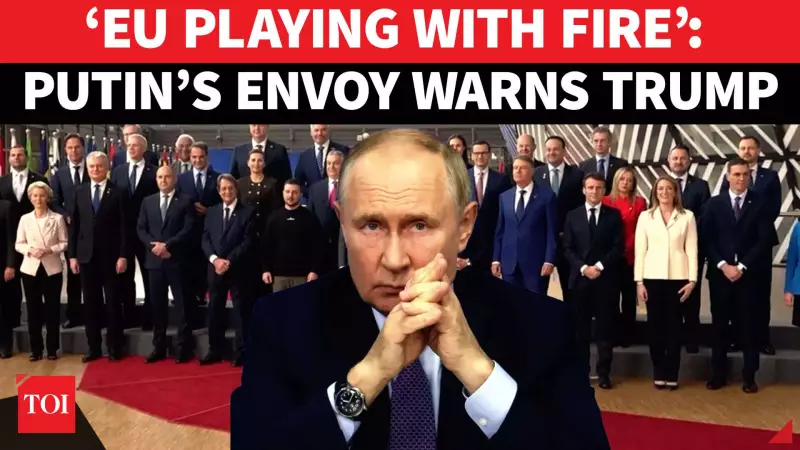
From Moscow, the reaction has been predictably severe and framed as a defense of the global financial architecture. A key adviser to the Kremlin, Kirill Dmitriev, has publicly cautioned that confiscating sovereign Russian funds is not just an attack on Russia but a step that could destabilize the entire international financial system. He argues that such an action would raise costs and risks for all participants, as the sanctity of sovereign assets held in foreign jurisdictions would be permanently undermined.
The theoretical warnings have already translated into concrete legal action. Russia's central bank has filed a lawsuit against Euroclear, challenging the very legality of the freeze and any potential move toward seizure. This legal battle promises to be long, complex, and highly consequential, further complicating the European Union's plans.
Diplomatic Gridlock and the Road Ahead
Within the corridors of the European Union, the once-unified resolve is showing signs of strain. The EU's Foreign Policy Chief, Kaja Kallas, has openly admitted that negotiations among member states are becoming "increasingly difficult." The core tension lies in balancing the immediate, desperate needs of Ukraine on the battlefield with the long-term health and credibility of the global financial order that Europe has long championed.
This debate underscores a profound modern dilemma: how far can nations go in using economic tools as weapons of war without causing collateral damage to the system itself? The plan to use frozen Russian assets is a high-stakes test case. Proponents see it as a just way to make Russia pay for reconstruction. Opponents, including major financial players, see it as a Pandora's box that could trigger capital flight, legal chaos, and a fragmentation of the global financial landscape.
The outcome of this standoff will have far-reaching implications, not just for Ukraine and Russia, but for every country that participates in the global economy. The world is watching to see if Europe will cross a financial Rubicon, and what the consequences of that crossing will be.