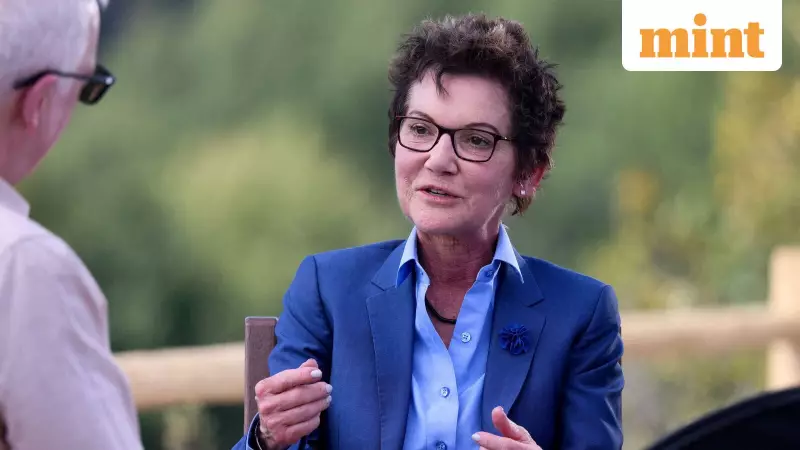
In a significant development for global monetary policy, San Francisco Federal Reserve President Mary Daly has publicly endorsed cutting interest rates at the central bank's upcoming December meeting. Daly's position carries substantial weight as she has rarely diverged from Fed Chair Jerome Powell's stance in public statements.
Labour Market Vulnerabilities Take Priority
Daly expressed particular concern about the current state of the job market during a recent interview. "On the labor market, I don't feel as confident we can get ahead of it," she stated, emphasizing that the labour sector appears "vulnerable enough now that the risk is it'll have a nonlinear change."
The Fed official highlighted that a sudden deterioration in employment conditions presents both a higher probability and greater management challenge compared to potential inflation spikes. This perspective marks a notable shift in the ongoing debate about the central bank's priorities.

Inflation Risks Appear Contained
Contrasting with labour market concerns, Daly downplayed inflation risks, noting that tariff-driven cost increases have been more muted than anticipated earlier this year. This assessment suggests that inflationary pressures may not warrant maintaining current interest rate levels.
Despite not having a voting position on monetary policy this year, Daly's alignment with potential rate cuts signals important momentum within the Fed. The central bank has already implemented consecutive cuts at its last two meetings, bringing rates down to a range between 3.75% and 4%.
Growing Debate Within Federal Reserve
The December 9-10 meeting promises to be contentious, with Powell likely playing a crucial role in resolving differences among committee members. Interest-rate futures markets currently indicate a strong likelihood of a December rate cut, according to CME Group data.
This sentiment received reinforcement when New York Fed President John Williams, another Powell ally, recently stated there was room to lower rates "in the near term." Williams emphasized that avoiding "undue risks" to the labor market was equally important as returning inflation to the Fed's 2% target.
However, opposition voices within the Fed are growing. Some officials express concern that cutting rates too quickly could leave the central bank unprepared if economic acceleration occurs next year. They point to elevated inflation in both tariff-exposed goods and domestic services as evidence that price pressures might be broadening.
Daly addressed these concerns directly, arguing that the Fed shouldn't delay rate cuts now due to fears about potentially reversing course later. She maintained confidence in the Fed's ability to respond flexibly to changing economic conditions in 2025.
The unusual level of public disagreement among Fed officials reflects genuine economic uncertainty rather than dysfunction, according to Daly. She characterized the diversity of opinions as healthy, suggesting that consensus would indicate problematic groupthink given current economic complexities.
As the December meeting approaches, the decision to cut or pause rates will ultimately require "a judgment call about where the risks of not moving are, and where the risks of moving are," Daly concluded, placing her assessment of these risks differently than some of her colleagues.