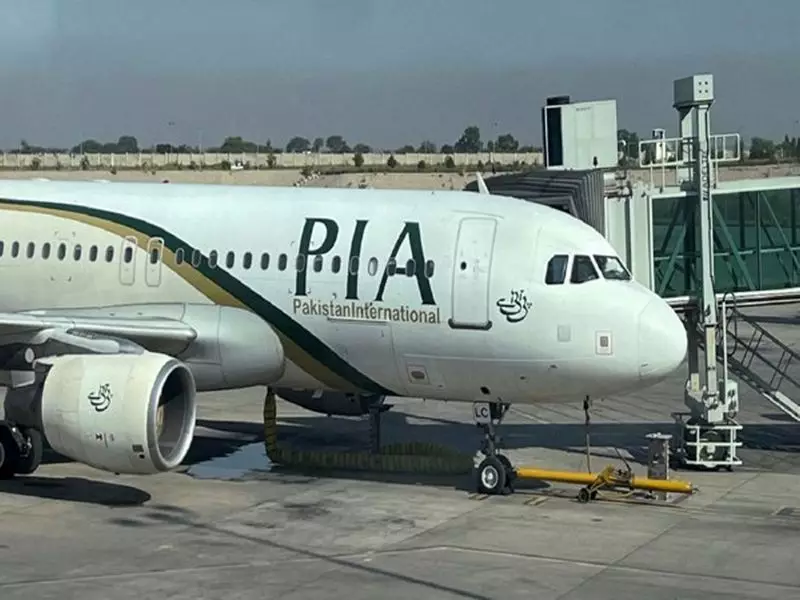
The ambitious plan to privatise Pakistan's beleaguered national carrier, Pakistan International Airlines (PIA), has suffered a severe and potentially crippling setback. The process, crucial for the cash-strapped airline's survival, has been thrown into disarray after the consortium of companies that was the sole remaining bidder officially withdrew from the race.
The Bidder's Exit and Government's Dilemma
The consortium, which included prominent names like Airblue Ltd and Arif Habib Corp, formally communicated its decision to the Pakistani government's Privatisation Commission. This exit leaves the government with no active bidders for the flag carrier, effectively halting the privatisation drive that was a key condition of Pakistan's recent $3 billion International Monetary Fund (IMF) bailout agreement.
According to sources, the consortium cited several reasons for pulling out. A primary concern was the government's refusal to shift significant portions of PIA's staggering debt onto the national balance sheet before the sale. The airline's massive financial liabilities, estimated to be in the hundreds of billions of Pakistani rupees, were seen as a deal-breaker for potential investors seeking a viable commercial entity.

PIA's Mounting Financial and Operational Woes
The bidder's withdrawal underscores the profound challenges facing PIA. The airline has been operating under severe financial distress for years, accumulating enormous losses. Its operational capacity has also been severely curtailed since 2020, when it was grounded from key markets in Europe and the United Kingdom due to a pilot licence scandal. This ban has drastically reduced its revenue-generating routes and damaged its international reputation.
Furthermore, PIA's fleet has shrunk due to lease returns and grounded aircraft, limiting its ability to compete. The combination of high debt, limited operations, and a legacy of mismanagement has created a perfect storm, making it an extremely difficult asset to sell without significant government-backed financial restructuring.
Implications for Pakistan's Economy and IMF Deal
The collapse of this privatisation attempt has wide-ranging consequences. For the Pakistani government, it represents a major policy failure and complicates its fiscal management. The state will now have to continue funding the airline's losses, diverting scarce resources from other critical areas. The Privatisation Commission has called an emergency meeting to discuss the way forward, but options appear limited.
Most critically, this development risks Pakistan's delicate agreement with the IMF. The privatisation of state-owned enterprises (SOEs), including PIA, was a cornerstone of the IMF's $3 billion Stand-By Arrangement. Failure to make progress on this front could jeopardise the disbursement of future tranches of the loan, which Pakistan desperately needs to stabilise its external finances. This puts the government in a tight spot, needing to either revive the PIA sale under new terms or find another major SOE to privatise swiftly.
The future of Pakistan International Airlines now hangs in the balance more precariously than ever. With its sole suitor gone and its financial holes deepening, the path forward is unclear. The government faces the unenviable task of either finding a new way to make the airline attractive to private investors or contemplating a far more complex and costly long-term nationalisation of its debts and restructuring—a move that would burden the Pakistani taxpayer for years to come.