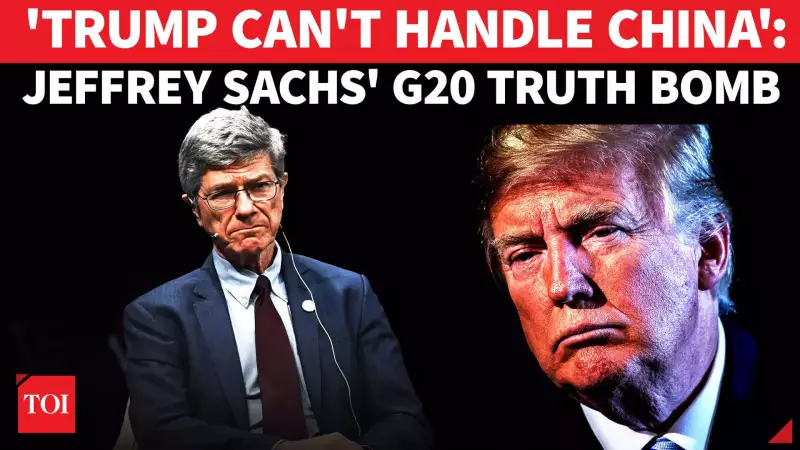
Prominent economist Jeffrey Sachs has delivered one of his most scathing critiques yet, arguing that Donald Trump's refusal to attend the recent G7 summit reflects a deeper "American neurosis" driven by significant global power shifts. According to Sachs, this move demonstrates how the United States is increasingly isolating itself on the world stage.
The End of American Dominance
Sachs presents a compelling case that the European and American imperial ages are rapidly ending while emerging economies reshape the world order. The BRICS alliance now represents 46% of the world's population and 41% of global GDP, creating a substantial challenge to the G7's traditional relevance.
The economist didn't mince words when describing Trump's behavior, characterizing the former president as "having a tantrum" because Washington can no longer dictate terms to other nations. This emotional response, Sachs suggests, stems from an inability to accept the new multipolar reality where Western powers must share influence with rising economies.

Historical Power Shifts and Covert Operations
Sachs painted a sweeping picture of global transition by examining historical cycles of power from Britain to China. He specifically highlighted how China's remarkable economic rise has fundamentally altered global dynamics, creating anxiety within American political circles.
The economist also made serious allegations about U.S. covert actions in Venezuela, suggesting these represent desperate attempts to maintain influence in regions where American dominance is waning. These interventions, according to Sachs, reflect a pattern of behavior from an empire struggling to accept its declining position.
BRICS Versus G7: The New Global Equation
The numbers tell a compelling story about why the global balance is shifting. With BRICS nations now controlling nearly half the world's population and a massive portion of economic output, the traditional G7 framework appears increasingly outdated. Sachs argues that these emerging economies are not just participating in the global system but actively reshaping it according to their interests and values.
This transformation goes beyond mere economics, representing a fundamental reordering of international relationships and power structures. The refusal to engage with multilateral forums like the G7 summit, in Sachs' view, only accelerates America's isolation from these emerging centers of global influence.
The analysis presents a provocative vision of a world where the rules are no longer written exclusively in Washington or European capitals. Instead, a more diverse group of nations is asserting its right to help determine the future direction of global governance and economic cooperation.