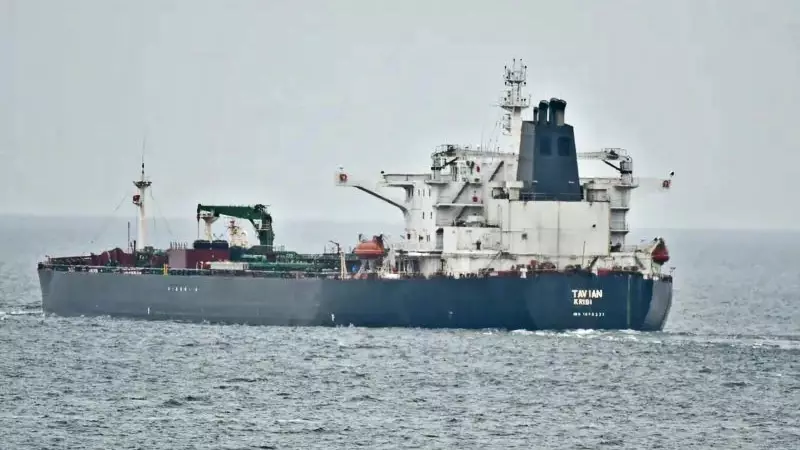
A Russian oil tanker, currently under United States sanctions, was tracked sailing through the strategic waters of the English Channel on a recent Friday. This maritime movement has drawn significant international attention, occurring merely a day after American authorities executed the seizure of a different vessel for breaching the G7-led price cap on Russian crude oil.
The Voyage of the NS Century
The vessel at the center of this development is the NS Century, a Suezmax crude oil tanker. According to maritime tracking data analyzed by Reuters, the ship was navigating the English Channel, a vital global shipping route. The tanker's journey is particularly notable because it is one of several vessels that have been directly sanctioned by the US Treasury Department.
These sanctions were imposed in early November 2023. The US government explicitly linked the NS Century and other tankers to a scheme involving the sale of Russian crude oil priced above the coalition-agreed cap. The G7, along with the European Union and Australia, had established this $60 per barrel price cap in late 2022. The mechanism is designed to curb Moscow's revenue from oil exports, which fund its military operations in Ukraine, while theoretically keeping Russian oil flowing to prevent a global price shock.

A Pattern of Enforcement and Evasion
The sighting of the NS Century follows a major enforcement action by the United States. On the preceding Thursday, the US Department of Justice announced the seizure of the oil tanker Suez Rajan. This vessel was implicated in transporting Russian crude that was sold at a price exceeding the G7 cap. The crude on that ship was allegedly owned by a subsidiary of the Russian state-run energy giant, Rosneft.
This sequence of events—a high-profile seizure followed by the transit of another sanctioned tanker through busy international waters—highlights the ongoing cat-and-mouse game between Western enforcers and entities seeking to circumvent the price restrictions. It underscores the practical challenges in monitoring and enforcing the complex sanctions regime across the vast global maritime network.
Implications and Global Response
The continued movement of sanctioned vessels like the NS Century poses direct questions about the efficacy and reach of the current enforcement framework. While the seizure of the Suez Rajan demonstrated a clear willingness by the US to take tangible action, the apparent freedom of movement of other listed ships suggests significant gaps remain.
Analysts point out that effective enforcement requires broad international cooperation, particularly from flag states and nations where these vessels might seek port services. The presence of the tanker in the English Channel, which borders multiple G7 and EU member states, will likely intensify discussions on strengthening maritime interdiction and compliance checks.
The core objective of the G7 price cap remains twofold: to limit Russian war funding and to maintain stability in global energy markets. However, incidents like these reveal the tension between these goals and the realities of a shadowy fleet of tankers willing to engage in opaque transactions. The financial and insurance services restrictions that underpin the cap are powerful tools, but their success hinges on consistent and uncompromising implementation by the coalition partners.
As geopolitical tensions persist, the maritime domain continues to be a critical frontline in the economic pressure campaign against Russia. The voyage of the NS Century is more than just a ship's journey; it is a test of international resolve and a signal of the enduring complexities in sanctioning a major energy exporter.