As the calendar turned to 2026, the annual ritual of selecting a 'word of the year' unfolded once more. Publishers and cultural commentators worldwide picked terms like 'AI slop', 'rage bait', and 'vibe coding' to define 2025. Yet, according to Professor Sanjoy Chakravorty, these choices largely missed the mark, chasing fleeting internet slang instead of capturing the true global zeitgeist. He proposes a more meaningful alternative: the word that genuinely roiled the world in 2025 was 'tariff'.
The Ephemeral Nature of Trendy Word Choices
Every year, institutions like the Oxford Dictionaries, Merriam-Webster, and Collins English Dictionary announce their chosen words. While some selections like 'lockdown' (2020), 'selfie' (2014), or 'fake news' (2017) have shown staying power, many others fade into obscurity. Who today recalls 'chav' (2004), 'hypermiling' (2008), or 'youthquake' (2017)?
For 2025, the trend continued. Collins Dictionary chose 'vibe coding', while Oxford selected 'rage bait'. The most popular pick across several publishers was 'AI slop'. These terms, often born from technology and youth culture, represent what Chakravorty calls "tiny attention bubbles" that pop quickly. The selection process, he argues, has become insular, magnifying niche online phenomena while ignoring words with profound real-world impact.

'Tariff': The Overlooked Global Word of 2025
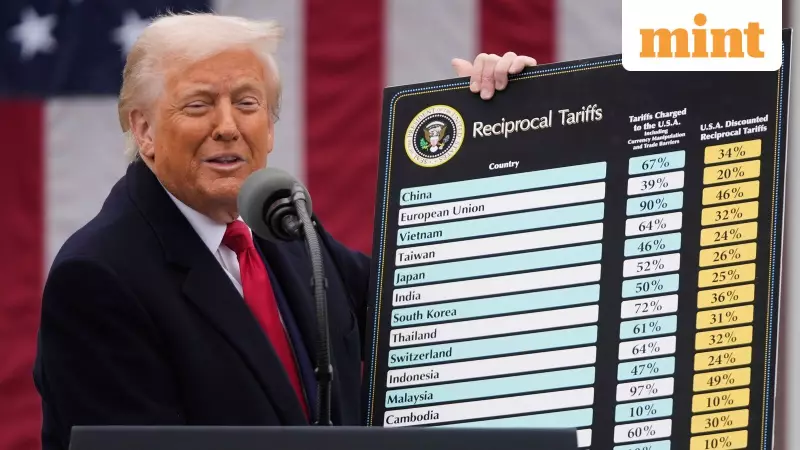
Amidst the noise of internet slang, a powerful term that shaped international relations, trade policies, and economies worldwide went largely unnoticed: 'tariff'. Notably dubbed "the most beautiful word" by former US President Donald Trump in 2025, 'tariff' became a central instrument of geopolitical strategy and economic policy.
While Dictionary.com shortlisted it, the platform ultimately chose the cryptic Gen Alpha slang '67'. This oversight mirrors past mistakes, such as the year of the Arab Spring (2012) when words like 'phantom vibration syndrome' were chosen over terms reflecting the historic upheaval. Chakravorty nominates 'tariff' as the true global word of the year for 2025, following the precedent set by 'pandemic' in 2020.
An Indian Word of the Year: The Case for 'Mahakumbh'
Chakravorty also advocates for a distinct Indian word of the year, moving beyond the short-lived experiment by Oxford Dictionaries which previously selected Hindi words like 'Aadhaar' (2017) and 'Atmanirbharta' (2020). Applying his own methodology, he evaluates several contenders for 2025.
'SIR' (Special Intensive Revision of electoral rolls) began in late October 2025 and remained headline news, though its impact is more likely for 2026. 'Operation Sindoor', a brief but potent political symbol that even garnered a Nobel Peace Prize nomination, receives an honourable mention.
However, the clear winner, according to Chakravorty, is 'Mahakumbh'. This refers to the once-in-144-years religious festival that, over approximately 45 days, reportedly saw an astonishing 660 million visitors. This scale, possible only in India, makes it arguably the largest human gathering in history. Therefore, 'Mahakumbh' is crowned the Indian word of the year for 2025, a testament to the nation's unique cultural and spiritual fabric.
In conclusion, while the word-of-the-year industry often focuses on the novel and the niche, the words that truly define an era are those that resonate across borders and in the halls of power. For 2025, 'tariff' captured the tense dynamics of the global economy, and 'Mahakumbh' embodied a unparalleled civilizational event in India. These choices, argues Professor Sanjoy Chakravorty of Temple University, offer a more substantive and accurate capsule of our time than any passing internet slang.