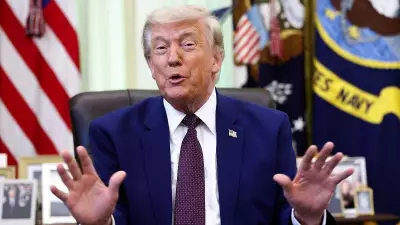
The unshakeable reign of the US dollar as the world's primary reserve currency, a cornerstone of global finance for decades, is facing a novel and potent challenge. The economic and foreign policies of US President Donald Trump's administration are testing the resilience of this system in unprecedented ways. While the dollar's position has survived many predictions of its demise, experts now warn that a deliberate attempt to retain the currency's benefits while shedding its associated costs could, ironically, precipitate its downfall.
The Precarious Balance of Dollar Dominance
For years, questions about the durability of the dollar's supremacy were largely theoretical. The global economy has been organized around the greenback, creating a self-reinforcing system. This dominance grants the United States significant power, including the extensive use of financial sanctions, and allows borrowers—especially the US government with its massive debt—to secure cheaper funding. However, this comes with a trade-off: high global demand for dollar assets can lead to an overvalued currency, hurting American manufacturers.
Most economists believe this balance still favours maintaining the dollar's top status. However, the Trump White House holds a different view. It believes the US can keep the advantages—like financial control and cheap borrowing—while eliminating the disadvantage of a strong dollar hurting factories. Stephen Miran, a White House adviser now at the Federal Reserve, has articulated a strategy involving trade barriers to boost US manufacturing, financial interventions to manage the dollar's value, and even using non-economic tools to defend its global financial role.

Inertia vs. Provocation: What Holds the System Together?
The dollar's incumbency is bolstered by powerful network effects, as explored in two notable 2025 books: Our Dollar, Your Problem by Harvard's Kenneth Rogoff and King Dollar by journalist Paul Blustein. The convenience of a single dominant currency for global trade and finance creates mutual benefits. When transactions are invoiced in dollars, it encourages holding dollar balances, which lowers borrowing costs in dollars, which in turn encourages more dollar invoicing—a virtuous circle.
This inertia is strong. History shows that currency standards stick long after a nation's peak economic power; the US overtook the UK economically in the late 19th century, but the dollar only definitively replaced sterling after 1945. Yet, as Rogoff cautions, push a regime hard enough and it will give way. The Trump administration's policies of trade fragmentation through aggressive tariffs threaten to reverse this virtuous circle. Less trade invoiced in dollars could erode its borrowing cost advantage, leading to even less dollar use—a dangerous feedback loop.
Catastrophic Missteps and the Search for Alternatives
Beyond trade, two other threats loom large. First is the lack of confidence in US economic management. Rogoff, a critic of fiscal excess, highlights America's addiction to over-borrowing and a historically enormous deficit even at full employment. This raises fears of future inflation or implicit default, undermining the perception that dollar assets are safe havens. Second, while the euro and Chinese renminbi have flaws as immediate successors, global dissatisfaction is growing.
The administration's response—including threats of retaliation against BRICS nations for de-dollarization plans—may be counterproductive. Its aggressive use of dollar-based sanctions, policy unpredictability, and coercion could neutralize the benefits other countries see in the current order, actively pushing them to seek alternatives. Blustein had argued the dollar's position was "almost impregnable" barring "catastrophic missteps by the US government"—a scenario that now seems less hypothetical.

The end of dollar dominance might not be a sudden, dramatic event with a clear new winner. Instead, the world could gradually shift to a fragmented system with no single standard or competing regional standards. This would represent a loss of a valuable global public good, with the United States standing to lose the most. For now, markets remain calm, perhaps betting on a return to normality. But if Trump's disruptive policies persist, the unthinkable could become reality, and the fall of King Dollar might be just one of many resulting problems.