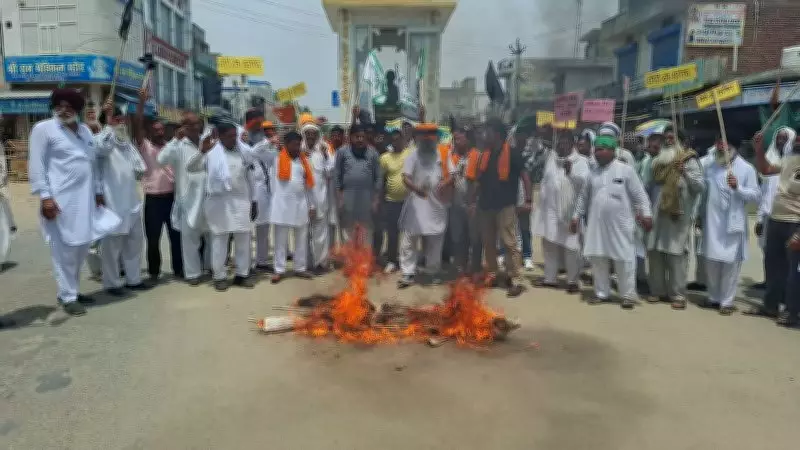
Intensifying their protest against the proposed India-US trade deal, scores of farmers under the banner of Bharatiya Kisan Union (Charuni) on Tuesday protested in Kaithal district’s Pundri town and burnt the effigies of Prime Minister Narendra Modi and US President Donald Trump, demanding that the proposed trade deal be scrapped.
Meeting and March in Pundri
Earlier, a meeting was organised by the office bearers of BKU and farmers, which was presided over by BKU (Charuni) district president Gurnam Singh Faral and was conducted by youth district president Vikram Dusain and block president Randhir Barsana. After the meeting, farmers marched to Ahluwalia Chowk under the leadership of BKU Youth State President Vikram Kasana. The protesters raised slogans against the Union government and burnt the effigies.
Nationwide Meeting Called in Chandigarh
Addressing the farmers, Vikram Kasana claimed that the trade agreement, if finalised, will have serious consequences for Indian agriculture. He announced that a national-level meeting of farmer unions and social organisations will be organised on June 25 at Kisan Bhawan, Sector 35-A, Chandigarh, to discuss the issue and formulate a future course of action.

“We have invited farmer organisations and other organisations from across the country. We will discuss the potential impact of the proposed trade deal and decide our next strategy,” Kasana said.
Concerns Over Agricultural Imports
He alleged that the agreement could open Indian agricultural markets to American farm products, creating stiff competition for Indian farmers. “A majority of Indian farmers own small landholdings and would find it difficult to compete with large-scale, heavily subsidised agricultural producers in the US,” he added.
District president Gurnam Singh Farl expressed concern that reducing or removing import tariffs on products such as cotton, sorghum, soybean oil, orange juice and other agricultural commodities could adversely affect domestic producers. He further alleged that the proposed deal might pave the way for increased imports of American dairy and poultry products.
MSP System Under Threat
Farmer leaders also voiced apprehensions regarding the future of the Minimum Support Price (MSP) system, claiming that any changes to MSP-based procurement could negatively impact farmers, particularly in states such as Haryana and Punjab where government procurement plays a significant role.