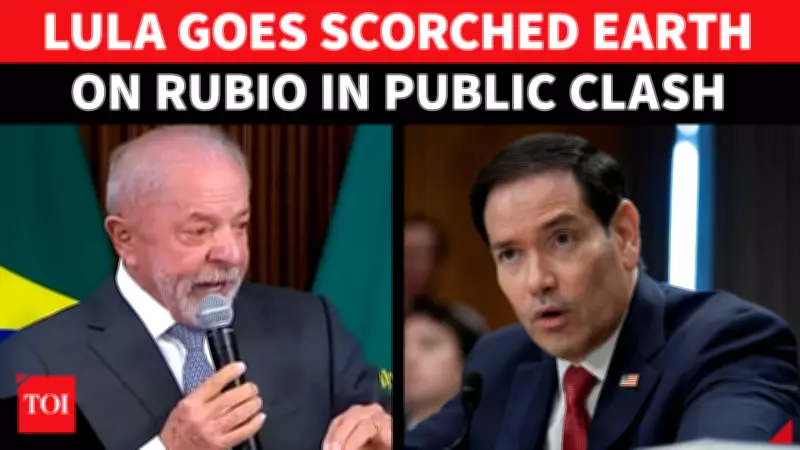
Brazilian President Luiz Inácio Lula da Silva launched a sharp personal attack on U.S. Secretary of State Marco Rubio while criticizing proposed Trump administration tariffs on Brazilian goods. Lula accused Rubio of harboring hostility toward Latin America, rejected the tariff plan as based on what he called 'falsehoods,' and warned that Brazil could consider reciprocal measures as tensions between Washington and Brasília escalate.
Lula's Accusations
In a public statement, Lula referred to Rubio as a 'frustrated Latin American' and claimed that the U.S. official's approach to diplomacy reflected a deep-seated bias against the region. The Brazilian leader did not mince words, stating that Rubio's actions were detrimental to the mutual interests of both nations.
Tariff Dispute Intensifies
The trade conflict began when the Trump administration proposed new tariffs on Brazilian steel and agricultural products. Lula condemned these measures, asserting that they were based on inaccurate data and would harm the Brazilian economy. He emphasized that Brazil would not bow to external pressure and might impose its own tariffs on American goods if necessary.

Economic analysts have expressed concern over the potential fallout from a full-blown trade war between the two largest economies in the Americas. The dispute could disrupt supply chains and increase costs for consumers in both countries.
Diplomatic Fallout
The personal nature of Lula's attack marks a significant escalation in diplomatic rhetoric. Rubio, known for his hardline stance on Latin American issues, has yet to respond directly to Lula's comments. However, U.S. officials have indicated that they stand by the tariff proposals, citing national security concerns and unfair trade practices.
Observers note that the feud could have broader implications for U.S.-Latin America relations, potentially affecting cooperation on issues such as immigration, drug trafficking, and climate change.
Looking Ahead
As the tariff war threatens to spiral into a larger conflict, both nations face pressure to find a diplomatic solution. Brazil's warning of reciprocal measures suggests that further escalation is possible, while the U.S. administration appears unwilling to back down. The coming weeks will be critical in determining whether the two countries can de-escalate tensions or if the dispute will lead to a prolonged trade war with global repercussions.