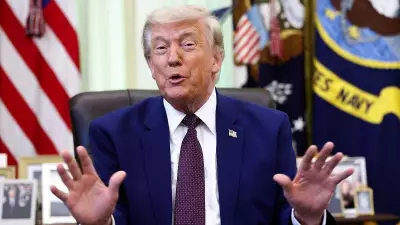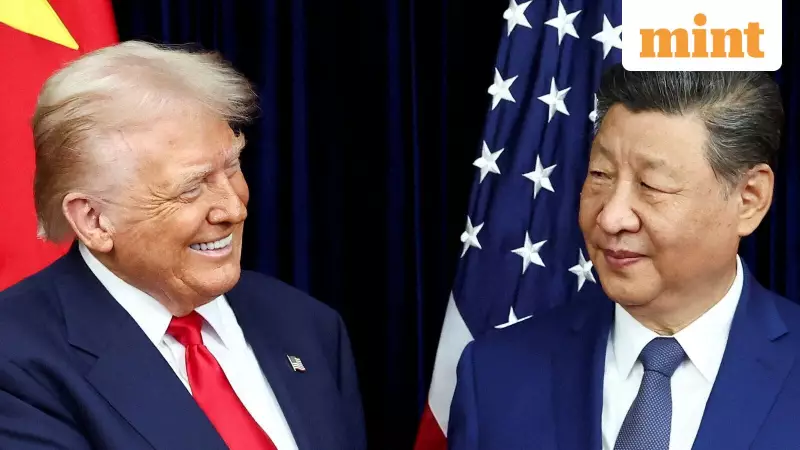
The fragile truce in the world's most consequential economic relationship has shattered. The United States and China have plunged back into a fierce trade conflict, with President Donald Trump threatening an additional 100% tariff on Chinese goods and Beijing retaliating with sweeping new controls on the export of rare earth minerals, critical for everything from smartphones to fighter jets.
A Sudden Escalation Shakes Markets
The latest round of hostilities began on October 9th, 2025, when China unveiled a stringent new regulatory framework for rare earth exports. The very next day, President Trump retaliated, announcing the massive new tariff and export controls on "any and all critical software." The immediate market reaction was severe. The S&P 500 index fell by nearly 3%, abruptly halting a months-long rally driven by optimism around artificial intelligence.
However, a small window for diplomacy remains. President Trump set the effective date for his tariffs as November 1st, a full month before China's most far-reaching controls take effect. He openly acknowledged this as a negotiating tactic, stating, "That's why I made it November 1st, we'll see what happens." This cautious approach underscores the unpredictable and volatile nature of current Sino-American relations.

Decoding China's Rare Earth Gambit
China's move, which President Trump claimed "came out of nowhere," is likely driven by a mix of three motives: long-term preparation, diplomatic pressure, and retaliatory pique. Beijing has long viewed its dominance in rare earth mining and processing as a potent weapon in economic statecraft. The new rules dramatically extend its reach. They require licenses for any product containing trace amounts of Chinese rare earths, even between foreign companies, and apply to goods made with Chinese mining or magnet-making technology, regardless of the minerals' origin.
Analysts see this as a preparatory step, creating a regulatory lever Beijing can pull at will. In peaceful times, licenses could be granted swiftly. During tensions, approvals could be slowed or denied, disrupting global tech supply chains. The move also serves as pressure ahead of a planned meeting between Trump and Chinese leader Xi Jinping at an APEC summit later this month, giving Beijing significant bargaining chips. Furthermore, it may be a direct response to America's recent "50%-rule," which China likely viewed as a breach of the spirit of past trade talks.
High Stakes and the Path Ahead
The escalation carries significant risks for both superpowers. President Trump has threatened to cancel the upcoming summit with Xi, which would upend China's diplomatic strategy. Meanwhile, China's own semiconductor industry would face severe near-term challenges without access to American chip-design software. While China may calculate that triple-digit tariffs hurt the US consumer more—potentially spiking prices before the Christmas season—neither economy stands to gain from a full-blown conflict.
The situation highlights a deep paradox in US-China relations. As Treasury Secretary Scott Bessent noted after earlier talks, better communication could prevent escalations. Yet, the events of the past week prove that even with dialogue, mutual dependence is constantly shadowed by mutual suspicion, leaving the global economy vulnerable to sudden shocks and miscalculation between its two largest players.