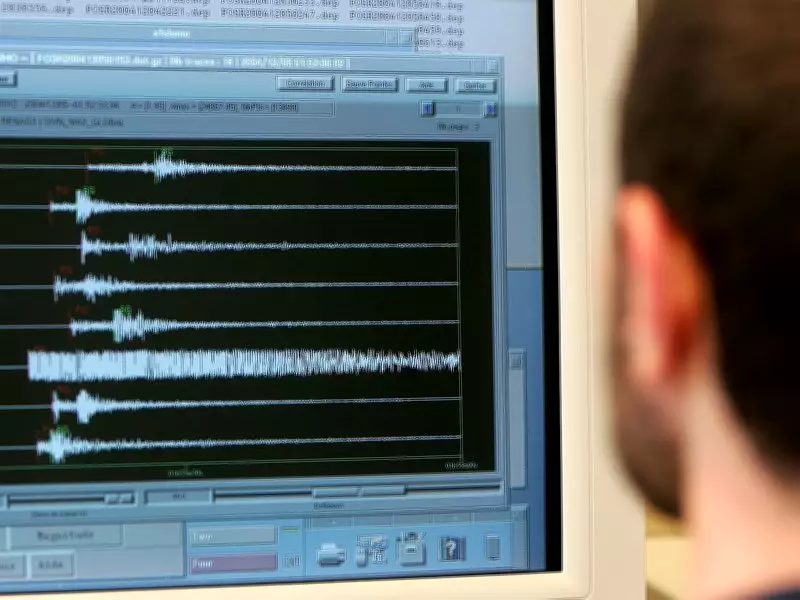
A powerful earthquake measuring 6.2 on the Richter scale struck Afghanistan on Saturday evening, sending strong tremors across Delhi, Jammu and Kashmir, and several other northern Indian states, according to the National Centre for Seismology (NCS). The quake occurred at 19:04:51 IST on June 27, 2026, with its epicentre located in Afghanistan at latitude 36.442 N and longitude 70.672 E, at a depth of 215 kilometres, the NCS reported on X.
Seismic Details and Regional Impact
The United States Geological Survey (USGS) independently assessed that the earthquake struck 43 kilometres south of Jurm in north-eastern Afghanistan. Initial reports indicated no immediate casualties or significant destruction within Afghanistan. The Red Cross noted that Afghanistan is highly prone to earthquakes, particularly in the Hindu Kush region, one of the world's most seismically active areas. The country's vulnerability stems from its location at the collision zone between the Indian and Eurasian tectonic plates, intersected by major fault lines.
The tremors in northern India occurred amid heightened tectonic activity across the wider region. At least five moderate earthquakes, ranging from magnitude 4.3 to 5.3, struck Pakistan's south-western province of Balochistan since Friday. These quakes reportedly injured at least five people and damaged several mud houses in remote areas including Barkhan, Musakhail, Kohlu, Kingri, and Rakhni.

Global Seismic Context
This regional activity coincides with severe global seismic events. A fresh earthquake measuring 4.9 on the Richter scale hit Venezuela on Saturday off Aragua, just days after two devastating earthquakes flattened buildings in the South American nation. The death toll from Venezuela's twin earthquakes climbed to nearly 1,000 as rescue operations entered their second day. Official government figures placed the confirmed death toll at 920, with 3,360 people injured and 172 still believed to be trapped beneath collapsed buildings. An online platform collecting reports of missing individuals had registered more than 50,000 cases by Friday afternoon.
International rescue teams and humanitarian aid have started arriving in the worst-affected parts of Caracas and surrounding regions, nearly 48 hours after the powerful 7.2- and 7.5-magnitude earthquakes struck. Growing frustration among local populations over limited resources and what residents described as an inadequate state response has been reported.