

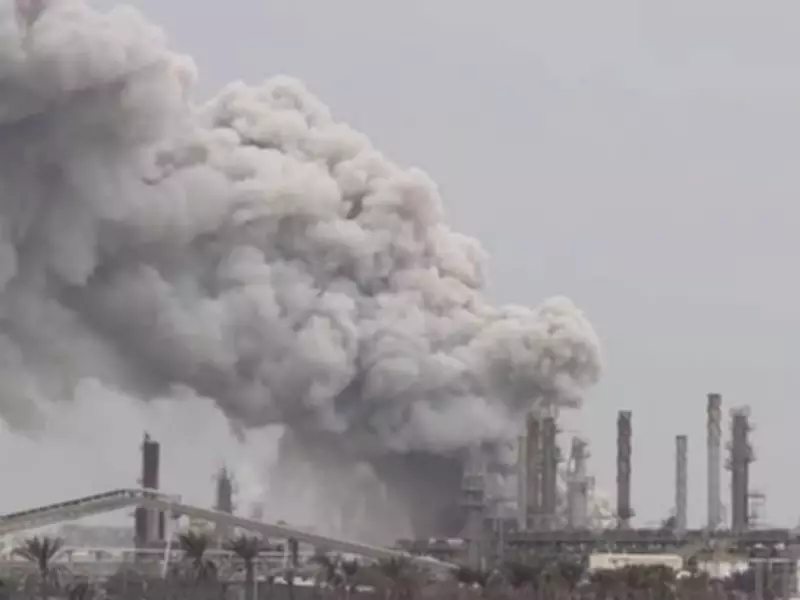
Bahrain on Saturday accused Iran of launching several drones into its territory, calling the act a violation of its sovereignty and a threat to regional peace. The accusation came just hours after the United States and Iran exchanged military strikes for the first time since a ceasefire aimed at ending recent hostilities in West Asia.
Bahrain's Condemnation and Accusation
In an official statement, Bahrain's Foreign Ministry strongly condemned what it described as an attack by "several Iranian drones" early Saturday morning. The ministry stated that the incident represented a "flagrant violation" of Bahrain's sovereignty and accused Tehran of undermining ongoing efforts to maintain regional stability. According to the Bahraini government, the drone attack was a deliberate attempt to sabotage diplomatic efforts following the implementation of the ceasefire pact.
Iran's Silence and Counterclaims
Tehran has not publicly responded to Bahrain's allegations. However, the Iranian government accused Washington of breaching the ceasefire terms after the US executed strikes against Iranian military assets, which led Iran to carry out retaliatory strikes against American installations in the Gulf. The quick succession of military strikes has heightened fears that the fragile peace agreement could rapidly disintegrate.

Strait of Hormuz Tanker Strike
Compounding regional security concerns, a commercial tanker navigating the Strait of Hormuz was struck by an unidentified projectile on Saturday, according to the UK Maritime Trade Operations (UKMTO). The UKMTO stated that while the vessel's bridge suffered physical damage, all crew members on board were reported safe. The agency added that it received a transmission from the ship's master at 0800 GMT confirming the strike. Official authorities have yet to identify the origin of the projectile, and no formal confirmation has linked the maritime strike to the broader regional escalation.
Background of US-Iran Military Strikes
The maritime incident follows a previous attack targeting a commercial cargo vessel in the Strait of Hormuz, which originally sparked the ongoing military face-off between the United States and Iran. The US military stated that it launched targeted operations against Iranian missile and drone storage units, alongside coastal radar facilities, after holding Iran responsible for the initial assault on the cargo ship. US Central Command characterized the retaliatory mission as a direct response to what it called "unwarranted aggression against commercial shipping" that violated the ceasefire.
Iran's Retaliation and Warning
Subsequently, Iran's Revolutionary Guards announced that their forces had struck US military installations in the Gulf region to avenge the American operations. While the elite force did not disclose the precise coordinates of the targeted sites, it issued a warning that any subsequent military maneuvers would trigger an even more severe response. The rapid exchange of fire between Washington and Tehran has fueled widespread anxieties that the fragile peace agreement could collapse if hostilities persist.
Global Concerns Over Energy Corridor Security
The fresh security breaches involving Bahrain and international shipping lines in the Strait of Hormuz have intensified global anxieties regarding the security of this vital energy corridor. The Strait of Hormuz is a critical chokepoint for global oil shipments, and any disruption there could have severe economic consequences worldwide.






