

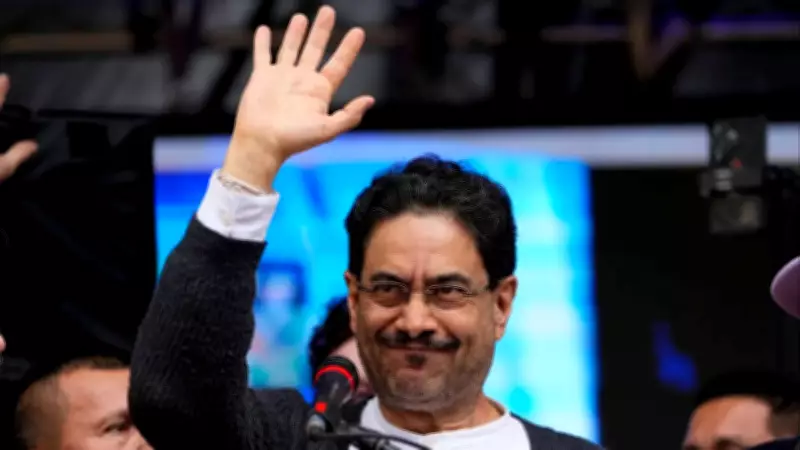
Colombia's deeply divided electorate heads to the polls on Sunday for a presidential runoff between Ivan Cepeda, a progressive lawmaker and heir to outgoing President Gustavo Petro's political movement, and Abelardo de la Espriella, a conservative outsider and businessman. Both candidates defeated nine other contenders in the first round on May 31, with de la Espriella securing 44% of the vote and Cepeda 41%, according to official results.
Fears of Renewed Conflict Dominate Campaign
Both candidates are pitching strategies to prevent the nonstop violence—car bombs, kidnappings, disappearances, and forced displacements—that Colombians experienced in previous decades. De la Espriella, nicknamed "The Tiger," proposes a heavy-handed approach that has earned him an endorsement from US President Donald Trump. He promises to build 10 mega-prisons, emulating El Salvador's President Nayib Bukele, whose policies lowered homicide rates but drew accusations of human rights abuses.
Cepeda pledges to continue Petro's "total peace" plan, negotiating with illegal armed groups despite largely failed efforts. The strategy, launched in 2022, saw its first success only on Thursday when a group of about 100 members surrendered weapons and began resettlement. Colombia's illegal groups have more than 27,000 members, and violence has roared back since the 2016 peace pact with the FARC guerrillas.

Violence Surges Amid Peace Pact Failures
Last year, authorities recorded 14,780 homicides, the highest since at least 2015, driven by clashes among illegal armed groups. Among those killed was conservative presidential hopeful Miguel Uribe. Extortions also soared to 13,417 cases in 2025, more than double the 2015 figure. More than 41 million Colombians are eligible to vote on Sunday.
"Right now, what worries me is the polarisation that exists between us: there are two very extreme sides, and the violence is concerning," said John Manrique, a lawyer in Bogota. "What I hope is that people accept who won... Let's accept it, regardless of the side, and try to reach a social consensus."
Candidates Offer Contrasting Solutions
De la Espriella proposes a heavy-handed crackdown on criminals, while Cepeda aims to continue Petro's dialogue efforts. They also differ on fixing Colombia's struggling health system, ballooning public debt, and entrenched corruption. Petro, without evidence, sowed doubts about the first-round results after Cepeda, who led polls, finished second.
Yamile Guevara, a retired teacher and Cepeda supporter, said Petro's plans need more time. "The left has always been viewed negatively; it has been harsh, and many people have died," she said. "So, one wonders what's wrong with people who have forgotten history... how can they not think carefully about which candidate they are going to elect?"
Accusations and Tensions Rise Ahead of Runoff
The lead-up to Sunday's vote has seen increased verbal attacks, fraud accusations, vote-buying, and intimidation claims. Cepeda filed a complaint with the Colombian Attorney General's Office and the International Criminal Court, accusing de la Espriella of ties to paramilitary groups. De la Espriella has denied the accusation.






